
Discover simple mindfulness exercises for anxiety that calm the mind, ease stress, and bring relief through breath, grounding, and daily awareness!
Mindfulness exercises for anxiety are simple yet powerful tools to help calm the mind, reduce stress, and ease the symptoms of anxiety. Whether you’re feeling overwhelmed, experiencing a panic attack, stuck in overthinking, or just searching for natural ways to feel more grounded, mindfulness offers practical techniques you can use anytime.
These practices gently guide your awareness back to the present moment. They help you slow down, regulate your breath, and create space between yourself and anxious thoughts. Many of them take just a few minutes and can be done without any special equipment.
In this article, you’ll discover a variety of mindfulness techniques for anxiety relief, from breathing exercises to grounding tools and everyday routines that support emotional balance. Whether you’re brand new to mindfulness or looking to deepen your practice, these exercises are here to help you find calm and clarity, right when you need it most.
This post is all about mindfulness exercises for anxiety.
This post may contain affiliate links. We may earn a small commission at no extra cost to you—thank you for supporting what we do. We only share offerings we truly believe in.
What Are Mindfulness Exercises for Anxiety?
Mindfulness exercises for anxiety are simple practices that help bring your awareness to the present moment. Instead of getting caught in racing thoughts or future worries, these exercises gently train the mind to focus—on the breath, the body, or the senses.
They don’t require any special equipment or long hours of meditation. In fact, even a few minutes a day can begin to shift how you experience anxious thoughts. By staying present, you interrupt the cycle of overthinking and create space for calm, clarity, and a grounded sense of being.
Whether it’s a breathing technique, a body scan, or simply noticing your surroundings, mindfulness exercises offer practical tools to regulate the nervous system and ease mental tension.
Why Mindfulness Exercises for Anxiety Actually Work (The Science)
Mindfulness exercises help reduce anxiety by changing how the brain and body respond to stress. When you feel anxious, a part of your brain called the amygdala becomes overactive. This is the area responsible for detecting danger and triggering a “fight or flight” response, even when the threat is just a stressful thought or worry.
Practicing mindfulness helps quiet the amygdala and activates the prefrontal cortex, which is involved in rational thinking and emotional regulation. This shift allows you to observe your thoughts with more clarity instead of getting overwhelmed by them.
Mindfulness also activates the parasympathetic nervous system, which is responsible for rest, digestion, and recovery. As a result, your heart rate slows down, your muscles begin to relax, and your breathing becomes deeper. These are all physical signs that the body is moving out of survival mode.
Studies have shown that regular mindfulness practice can lower anxiety levels, reduce symptoms of stress, and improve overall well-being. Many people report feeling calmer, more focused, and better equipped to handle anxious thoughts—even after just a few weeks of consistent practice.
Over time, mindfulness can reduce the brain’s tendency to ruminate, increase emotional resilience, and build a stronger sense of inner calm. That’s why it’s considered such a powerful tool for managing anxiety naturally.
Best Mindfulness Exercises for Anxiety Relief
#1 4-7-8 Breathing
Inhale gently through your nose for 4 counts, hold the breath for 7 counts, and exhale slowly through your mouth for 8 counts. This technique helps slow the heart rate, calm the nervous system, and is especially useful during moments of high anxiety or before sleep. Try repeating the cycle for 3–4 rounds, breathing as smoothly and evenly as you can.
#2 Humming or Vocal Toning
Sit comfortably and take a slow breath in. As you exhale, hum gently or make a soft “mmm” or “om” sound. Feel the vibration in your chest, throat, or lips. This activates the vagus nerve, supports the parasympathetic nervous system, and creates a soothing, self-regulating effect.
#3 Finger Tracing Breathing
Hold up one hand. Use the index finger of the other hand to slowly trace each finger up and down. As you trace up a finger, inhale; as you trace down, exhale. Continue through all five fingers. It’s a great tactile and visual tool.
#4 Body Scan Meditation
Close your eyes and begin by noticing how your body feels. Start at the top of your head and slowly move your attention down through your body—your face, shoulders, arms, chest, stomach, legs, and feet. As you scan each area, simply observe any sensations like tightness, warmth, or tingling, without trying to change anything.
#5 Mindful Walking
Take a short walk, either indoors or outdoors, at a slow, relaxed pace. With each step, pay attention to the sensation of your feet touching the ground. Notice how your arms move, how the air feels on your skin, and the sounds around you. If your thoughts drift, gently return your focus to the act of walking. This is a great way to practice mindfulness when sitting still feels difficult.
#6 5-4-3-2-1 Grounding Technique
This sensory awareness technique helps you reconnect with the present moment. Name:
5 things you can see around you
4 things you can feel (like your clothes, chair, or air on your skin)
3 things you can hear
2 things you can smell
1 thing you can taste or imagine tasting
Go through each step slowly and intentionally. This practice interrupts anxious thoughts and brings your attention back to your body and environment.
#7 Sound Meditation or Mindful Listening
Find a quiet place and choose a soothing sound—this could be a singing bowl, a nature track, or even the hum of a fan. Close your eyes and focus entirely on the sound. Notice its rhythm, volume, and how it makes your body feel. If your thoughts wander, gently bring your attention back to listening. You can listen to sounds in your environment or find a calming sound bath to listen to online.
#8 Thought Labeling or “Noting”
During moments of stress, observe your thoughts without judgment. Thought labeling is a simple meditation technique that can also be practiced during everyday moments like brushing your teeth or walking. As thoughts or emotions arise, gently label them in your mind—“thinking” or “feeling.”
You don’t need to analyze or fix anything, just observe and name. For example, if a thought pops up like “I forgot to reply to that message,” you might simply label it as “thinking.” If a wave of nervousness arises in your body, you might label it “feeling.” This practice helps you disconnect from overthinking and see thoughts as passing events, rather than something you have to follow or believe.
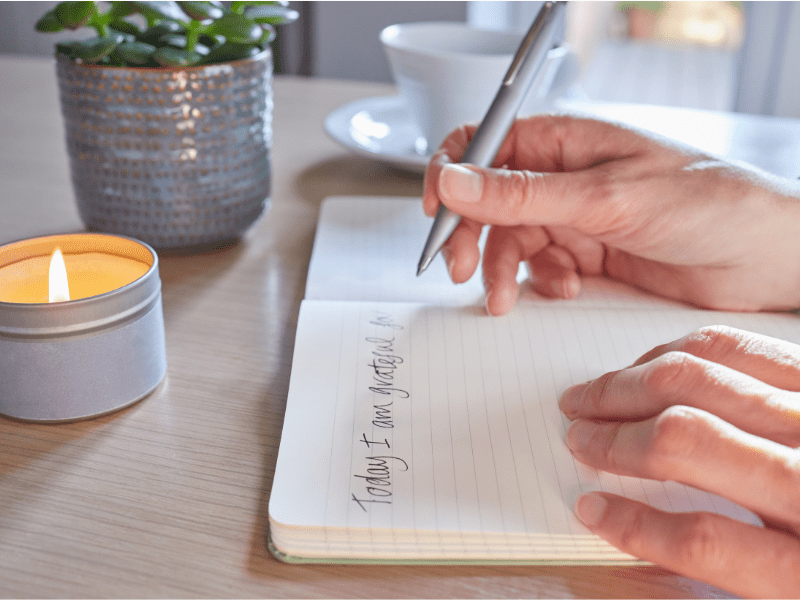
#9 Mindful Journaling
Set a timer for 5 to 10 minutes. Write freely about how you’re feeling without trying to edit or judge your thoughts. If you’re not sure where to start, try prompts like: “What’s making me anxious right now?” or “What do I need to feel supported today?”
You can also find mindfulness journals with prompts to help you stay inspired to consistently practice. There’s the Mindfulness Journal for Anxiety with daily practices, the Worry for Nothing Journal which is more general and open-ended, or “Let that Shit Go” for a more light-hearted and fun approach.
#10 Breath Counting to 10
Inhale and count “one,” exhale and count “two,” and continue up to ten—then start over. If your mind wanders or you lose track, gently start again from one.
#11 Gratitude Reflection
Pause and think of three things you’re grateful for, big or small. This could be a warm cup of tea, support from a friend, or simply the fact that you’re breathing. It can even be more simple based on things you see around you, like “I’m grateful for my fingernails, I’m grateful for my toes.”
#12 Focusing on a Single Object
Choose a small object, like a stone, candle, or leaf. Sit quietly and hold or look at the object for a few minutes. Observe its texture, color, weight, and shape. If your mind drifts, gently bring it back to what you see and feel.
#13 Visualization Meditation
Close your eyes and imagine a calm, safe place—like a forest, beach, or quiet room. Engage all your senses: What do you see, hear, feel, and smell in this peaceful setting? This exercise helps the brain and body relax by triggering a felt sense of safety.
#14 Pause and Name 3 Things You’re Doing Right Now
Say out loud or mentally: “I’m sitting on a chair. I’m holding a phone. I’m breathing.” This quick, mindful check-in pulls you out of anxious loops and reminds you that you are safe in this moment.
#15 Affirmation with Breath
This practice combines slow, conscious breathing with intentional phrases to support emotional balance. As you inhale, imagine breathing in something positive—like calm, strength, or safety. As you exhale, picture releasing something you no longer need—like tension, fear, or anxiety. For example, you might breathe in and silently say “I am safe,” then breathe out and say “I let go of anxiety.”
You can also use full positive affirmations with each complete breath, such as “I am grounded,” or “I trust myself to handle what comes.” This pairing of breath and affirmation not only calms the nervous system but also shifts your inner narrative in a gentle, empowering way.
#16 Savoring While Eating or Drinking
During a meal or tea break, slow down and bring your full attention to the experience. Use all five senses: notice the colors and textures, inhale the aroma, and take small bites or sips while focusing on flavor and temperature. Try to name one or two sensations you notice with each bite.
#17 Touch-Point Grounding
While washing dishes, showering, folding clothes, or doing any daily chores, choose three specific physical sensations to focus on—such as the warmth of water, the texture of soap, or the movement of your hands. Silently name each one as you feel it. When your thoughts wander, gently bring your attention back to those touch points. This keeps your mind anchored in the body.
How to Turn Mindfulness Exercises for Anxiety into a Daily Habit
Mindfulness is most effective when it becomes part of your daily routine. While it might feel unfamiliar at first, building a habit is easier than it seems, especially when you start small and stay consistent. These simple tips can help you make mindfulness a natural part of your everyday life.
Start Small
You don’t need to begin with long meditation sessions. Choose one simple mindfulness exercise—like 4-7-8 Breathing or Thought Labeling—and start with just 3 to 5 minutes a day. Keeping it short makes it easier to stay consistent, especially when you’re just beginning.
Pick a Consistent Time
Whether it’s right after you wake up, during a lunch break, or before bed, find a time that naturally fits into your daily routine. Practicing at the same time each day helps train your mind and body to expect it, making it easier to maintain over the long term.
Pair It with an Existing Habit
Link your mindfulness exercise to something you already do without thinking—like brushing your teeth, drinking your morning tea, or even washing dishes. You can try exercises like Touch-Point Grounding or Gratitude Reflections which can be done in these moments. This technique, called “habit stacking,” helps the new habit feel more natural and easier to remember.
Create a Dedicated Space
Designate a small space where you feel calm and undisturbed. It doesn’t have to be fancy—a quiet chair, a corner with a cushion, or even a spot near a window will do. Returning to the same space each day can help create a sense of ritual and focus.
Use Reminders or Tools
It’s easy to forget new habits, especially in the beginning. Try setting a daily reminder on your phone, placing a sticky note in a visible spot, or using a mindfulness app to guide your sessions and track your progress.
A few popular apps include Insight Timer (free with thousands of guided sessions), Headspace (great for beginners), and Calm (known for soothing voices and sleep support). Choose one that fits your style and needs, it can make a big difference in staying motivated.
Stay Consistent, Not Perfect
You might skip a day, and that’s okay. What matters more is returning to the practice without judgment. Mindfulness itself teaches self-compassion, so let your habit grow naturally, even if it’s not perfectly maintained.
Notice the Shifts
Pay attention to small but powerful changes: fewer anxious spirals, a calmer breath, or more awareness during your day. These subtle shifts are signs that mindfulness is working, and noticing them helps motivate you to keep going.
When to Practice Mindfulness Exercises for Anxiety
Mindfulness can be practiced anytime, but there are certain moments when it’s especially helpful for managing anxiety. Being aware of these key times allows you to respond more skillfully, rather than getting swept away by anxious thoughts or feelings. Here are a few ideal moments to weave mindfulness into your day.
When You First Wake Up
Starting your day with a few minutes of mindfulness sets a calm and grounded tone. It helps you become aware of your mental state before distractions or stressors take over.
Before a Stressful Event
If you know you have a meeting, presentation, or difficult conversation coming up, taking even 2-3 minutes to center yourself can help reduce anticipatory anxiety and improve your focus.
During Anxiety Spikes or Panic Attacks
When anxiety suddenly flares up, grounding exercises like Finger Tracing Breathing, Affirmations, Body Scans and 5-4-3-2-1 Grounding can help regulate your nervous system and bring you back to the present.
In the Middle of the Day
Midday mindfulness breaks offer a reset for your body and mind. A short practice after lunch or between tasks can reduce tension and prevent anxiety from building throughout the day.
Before Bedtime
Mindfulness at night can calm a racing mind and relax the body for sleep. Body scans or gentle breathing exercises are especially effective for unwinding from a stressful day.
Whenever You Notice Overthinking
If you catch yourself stuck in a loop of worries or negative self-talk, that’s a perfect moment to pause, take a breath, and redirect your awareness to the present moment.
This post was all about mindfulness exercises for anxiety.
If this guide helped you feel a little more grounded, consider bookmarking it or sharing it with someone who might need it too. You’re also welcome to explore more mindfulness resources or sign up for our newsletter for supportive tools delivered straight to your inbox.


