
Feeling overwhelmed? Discover simple mindfulness techniques for stress that can help you reset, breathe easier, relieve anxiety, and bring more calm into your day.
Stress shows up everywhere. In your racing thoughts, shallow breathing, and the tension you carry without realizing it. If you’ve been looking for mindfulness techniques for stress, you’re not alone. More and more people are turning to simple, science-backed practices to calm the mind, ease anxiety, and bring a sense of balance into daily life.
Mindfulness isn’t about stopping your thoughts or meditating for hours. It’s about gently coming back to the present moment by noticing your breath, your surroundings, and your emotions with curiosity instead of judgment. Even a few seconds of mindful awareness can shift how your body and mind respond to stress.
In this guide, you’ll learn practical mindfulness techniques for stress relief — from quick grounding exercises you can use anytime, to sensory-based practices that reconnect you with your body, to everyday habits that naturally bring more calm into your routine. These tools are simple, flexible, and designed to fit seamlessly into real life.
This post is all about mindfulness techniques for stress.
TABLE OF CONTENTS
Why Mindfulness Techniques for Stress Actually Help
Science Behind Mindfulness
Mindfulness Techniques for Stress (39 Exercises organized into 3 categories):
Quick Mindfulness Techniques for Immediate Stress Relief
Movement & Sensory-Based Mindfulness Techniques
Everyday Mindfulness Techniques
How to Use Mindfulness Techniques for Stress
This post may contain affiliate links. We may earn a small commission at no extra cost to you—thank you for supporting what we do. We only share offerings we truly believe in.
Why Mindfulness Techniques for Stress Actually Help
Stress often pulls the mind into constant overthinking. Replaying the past, worrying about the future, and carrying tension in the body. Mindfulness works by breaking this cycle.
By gently bringing your attention back to the present moment, it helps calm the nervous system and creates space to respond instead of react.
More and more people are turning to mindfulness as a natural way to manage stress in a fast-paced world. Instead of avoiding stress or trying to push it away, mindfulness teaches us how to meet it with awareness and compassion. These simple techniques create small pauses in the day, helping you feel grounded, balanced, and better equipped to handle whatever comes your way.
Science Behind Mindfulness
When you experience stress, the body activates the sympathetic nervous system—our fight-or-flight response. This causes your heart rate to increase, breathing to become shallow, and your mind to race. Mindfulness helps interrupt that pattern by activating the parasympathetic nervous system, which promotes relaxation and calm.
The parasympathetic nervous system allows your body to begin to settle. Heart rate slows, heart rate variability (HRV) improves, and the balance shifts from a state of stress toward one of restoration and regulation. In other words, mindfulness helps guide the body back to a grounded, more resilient state.
On a neurological level, mindfulness practice strengthens areas of the brain linked to emotional regulation and self-awareness. This includes the prefrontal cortex, anterior cingulate cortex, and insula. It also reduces activity in the amygdala, the brain’s fear center.
Functional neuroimaging studies show structural brain changes after mindfulness training. For example, a recent eight-week Mindfulness-Based Stress Reduction (MBSR) study found an increased cortical thickness in areas related to attention and emotional control, while dampening activity in regions tied to stress and anxiety.
Over time, these changes transform how you respond to stress. Not just in the moment, but in lasting ways. The body learns to return to balance more easily, while the mind develops greater clarity, stability, and resilience.
Mindfulness Techniques for Stress
These mindfulness techniques are organized in three categories: (1) Quick Techniques for Immediate Stress Relief, (2) Sensory and Movement-Based Techniques, and (3) Techniques for Everyday Life.

Quick Mindfulness Techniques for Immediate Stress Relief
#1 Temperature Shift Reset
Grab something cold (an ice cube, a chilled bottle, or even a cold washcloth) and hold it in your hand for 10–15 seconds. Notice the sensation fully. This sudden temperature change interrupts racing thoughts and helps bring attention back to your body.
#2 5-4-3-2-1 Grounding
Start by noticing five things you can see, four things you can touch, three sounds you can hear, two scents you can smell, and one thing you can taste. Using your senses in this way helps interrupt the stress response and creates a sense of steadiness.
#3 Micro-Journaling
Set a timer for one minute and write down exactly what’s on your mind — no filtering, no editing. When the timer ends, take one deep breath and set the paper aside. Releasing your thoughts in this way clears mental clutter and makes space for calm.
#4 Finger Tracing Breath
Place one hand in front of you, fingers spread. As you slowly trace up one finger with the opposite hand, inhale; as you trace down, exhale. Continue finger by finger until you reach the last one.
#5 Box Breathing
Inhale deeply for four counts, hold your breath for four, exhale for four, and pause again for four. Repeating this cycle a few times activates the parasympathetic nervous system, which helps slow your heart rate and ease tension.
#6 Progressive Muscle Relaxation
Stress often shows up as hidden tension in the body. Starting from your toes, gently tense each muscle group for a few seconds, then release. Move upward through the legs, torso, and shoulders until you reach the face.
You may notice areas of tightness, warmth or ease. Simply notice the sensations without judgement. This can be done as a guided meditation or as a simple practice you do on your own.
#7 Name, Label, Release
When strong emotions arise, silently name what you’re feeling, “tense,” “frustrated,” “anxious,” and take a slow, steady breath. This small act of acknowledging your state can reduce emotional intensity and create distance from overwhelming thoughts.
#8 Counting Backwards
Close your eyes and begin counting backward slowly from 20, syncing the rhythm of your breath with each number. This simple exercise refocuses the mind and creates space for a sense of calm to emerge.
#9 Sigh It Out
Take a deep breath in, then release a slow, audible sigh. Repeat this two or three times, letting your shoulders drop as you exhale. This activates the body’s natural relaxation response and quickly eases tension.
#10 Touchpoint Awareness
Bring attention to where your body meets the ground, chair, or any surface supporting you. Notice the weight, pressure, and texture beneath you. This tactile focus draws awareness out of looping thoughts and creates an immediate sense of grounding.
#11 One-Minute Visualization
Close your eyes and picture a calming scene. It might be a quiet beach, a forest, or simply the sky above you. Imagine the sounds, textures, and colors in vivid detail. Even a brief visualization can soothe the mind and shift you into a more relaxed state.
#12 Shoulder Drop Release
Lift your shoulders up toward your ears, hold for three seconds, and then let them drop completely. Repeat two or three times while breathing slowly. This quick motion signals the body to release tension stored in the upper back and neck.
#13 Palm Press Pause
Press your palms together firmly for 5–10 seconds, then release and notice the sensations in your hands. Repeat a few times as needed. The gentle pressure activates sensory awareness and helps redirect anxious energy.
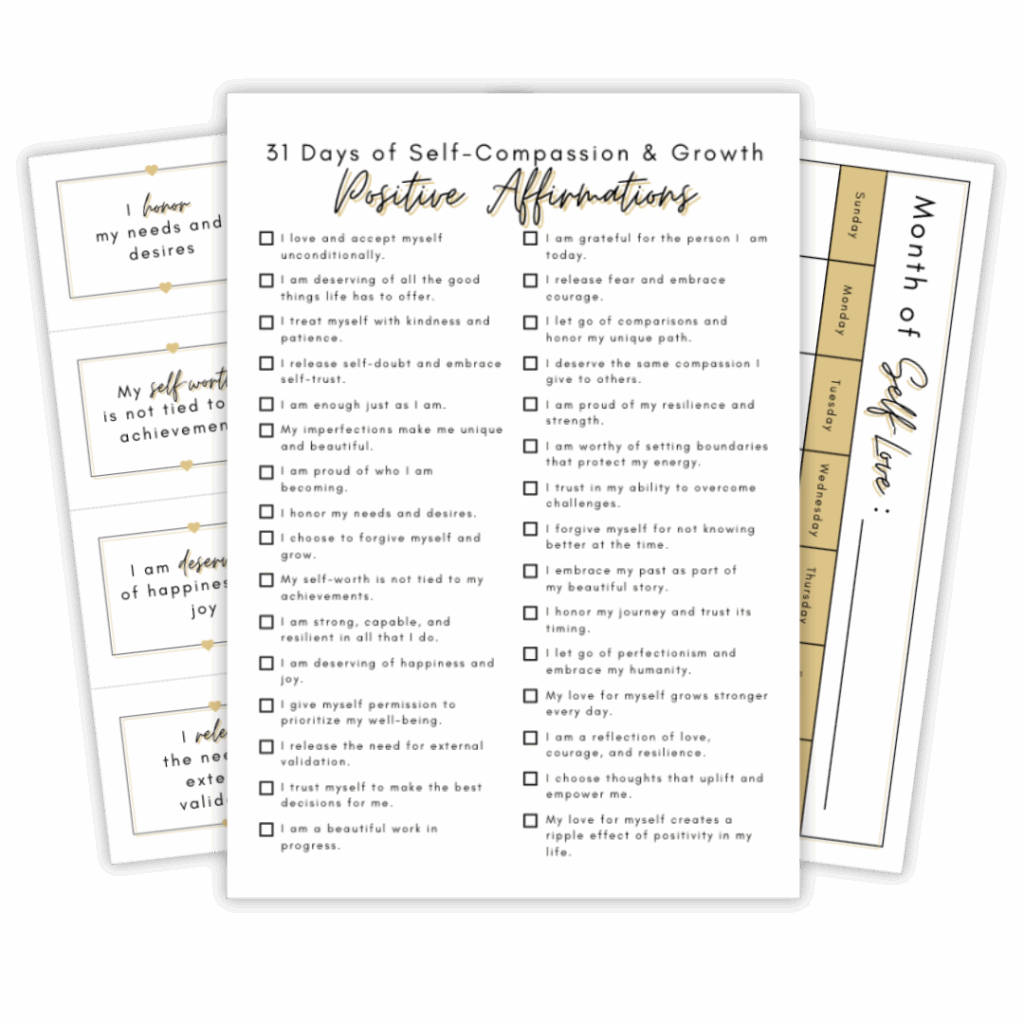
Want a FREE bundle with Positive Affirmations for Self-Love?
Just fill out the form below to receive your free affirmation bundle—featuring a 31-day challenge, printable affirmation cards, a full list of affirmations, and a calendar to help you stay gently committed each day.
Movement & Sensory-Based Mindfulness Techniques
#14 Gentle Yoga or Stretching
Even a few minutes of mindful movement can release tension and quiet the mind. Move slowly through stretches or simple yoga poses while focusing on your breath and how your body feels. The combination of movement and awareness helps relax tight muscles and restore balance.
#15 Mindful Touch Exploration
Pick up an object nearby (a stone, fabric, or even your coffee mug) and explore its texture, temperature, and weight. Notice how it feels without rushing or analyzing. Engaging your sense of touch in this way brings attention out of the mind and into the body.
#16 Shake It Out
Stand up, put on a short song, and shake your body from head to toe for 30 seconds. Wiggle your arms, loosen your shoulders, and gently bounce your knees. This playful release wakes up your nervous system and instantly clears built-up tension.
#17 Slow-Motion Walking
Instead of a typical walking meditation, try slowing your pace dramatically, as if you’re moving through water. Notice how your body balances, the weight shift in your feet, and the subtle sounds around you. Turning it into a mini “challenge” keeps it fun and surprisingly calming.
#18 Nature Micro-Moment
Step outside, even if it’s just for a minute, and choose one natural element to focus on — a tree, a cloud, or a flower. Notice its colors, shapes, and movements without labeling or analyzing. This small connection with nature can instantly shift your energy and create a sense of calm.
#19 Scent Reset
Grab something aromatic like essential oils, fresh herbs, coffee beans, or even your tea, and inhale deeply. Close your eyes and notice how the scent feels: sharp, sweet, earthy, or warm. Because scent connects directly to the emotional centers of the brain, this can quickly shift your state.
#20 Cloud Watching
Lie down or sit comfortably where you can see the sky and watch the clouds drift by. Notice their shapes, textures, and slow movements without trying to judge or name them. This playful pause brings a sense of spaciousness and quiet.
#21 Mindful Doodling
Grab a pen and let your hand move across the page without planning what to draw. Focus on the feeling of the pen, the curves, and the shapes that naturally appear. It’s less about making something beautiful and more about letting your creativity flow.
#22 Shadow Tracing
Pick an object nearby and place a piece of paper where its shadow falls. Slowly trace along the edges of the shadow, following its natural form. The quiet focus required to notice shapes and light details draws you into the present moment.
#23 Sound Sketching
Close your eyes and listen closely to the sounds around you (birds, traffic, voices, or distant hums) and lightly “sketch” the sounds onto paper using lines or shapes. It doesn’t need to look like anything specific, it’s about translating what you hear into a visual pattern.
#24 Nature Texture Collage
Collect a few natural items such as leaves, petals, bark or stones, and spend a few minutes arranging them into a small design or pattern. Focus on the textures, shapes, and colors as you place each piece.
#25 Candle Flame Focus
Light a candle and spend a minute simply observing the flame’s movements, shapes, and subtle flickers. Notice the glow, the warmth, and the shadows it creates. This can be especially calming when combined with slow, steady breathing.
#26 Mirror Movement Exercise
Stand in front of a mirror and move your arms or sway gently, watching your reflection. Match your movements with your breath and explore how your body feels in motion. This playful technique brings awareness to both sight and movement while keeping the focus on self-connection.

Everyday Mindfulness Techniques
#27 Mindful Eating
Instead of eating on autopilot, slow down and really notice the experience of your meal. Pay attention to the colors, textures, and flavors with each bite, chewing slowly and without distraction. It could even be looking at your plate for 15 seconds before taking your first bite.
#28 Technology Check-In
Before unlocking your phone or switching between tabs, pause and take a breath. Ask yourself why you’re reaching for it and whether it’s necessary. These small check-ins bring more awareness to your habits and help reduce the overwhelming feelings we can experience with technology.
#29 Smile When You See Red
Pick a visual cue, like a stop sign, red car, or traffic light. Each time you notice it, pause, soften your shoulders, and smile, even just slightly. Linking mindfulness to recurring sights transforms small moments into quick reset opportunities.
#30 Single-Tasking
Choose one task and give it your complete attention instead of juggling several things at once. Notice the sensations, movements, and sounds involved in what you’re doing, whether it’s washing dishes, writing, or folding laundry. Bringing mindfulness to ordinary activities can transform them into calming rituals.
#31 Gratitude Moment
Take a moment each day to acknowledge something you’re grateful for, big or small. It could be a conversation, a warm meal, or simply the sunlight on your face. Keeping a gratitude journal is also an effective way to build a consistent practice, and it only takes a few minutes each day.
#32 Mindful First Sip
When you have your morning tea, coffee, or water, pause and truly notice the first sip. Feel the warmth or coolness, taste the flavors, and breathe as you swallow. This tiny ritual sets a calm, intentional tone for the rest of your day.
#33 Doorway Breathing
Every time you walk through a doorway — at home, work, or anywhere — take one slow, deep breath. Let the inhale represent arriving in the new space and the exhale release whatever came before. While it can take time to make it a habit, turning doorways into mini check-in points is a playful way to reset throughout the day.
#34 Waiting-Time Awareness
Instead of grabbing your phone in line or while stuck in traffic, use those pauses to notice your surroundings. Tune into the sounds, movements, and colors around you. Turning waiting into mindful observing transforms “lost time” into a moment of presence.
#35 Mindful Handwashing
Turn a daily routine into a calming practice. Feel the temperature of the water, notice the sensation of the soap, and take in the scent as you wash your hands. This small sensory moment can anchor you when your mind is racing.
#36 Music Check-In
The next time you play music, whether commuting, cooking, or cleaning, close your eyes for 20 seconds and listen deeply to one detail, like the bass line or a single instrument. Engaging one layer of sound sharpens focus and turns ordinary listening into a mindful pause.
#37 Morning Sky Moment
Before diving into your day, step outside or look out the window for 30 seconds. Notice the colors of the sky, shifting clouds, or movement of sunlight. It’s a grounding way to connect with the present before getting swept into tasks.
#38 Color Theme Challenge
Choose one color each morning and make it your theme for the day. Throughout the day, pause whenever you spot that color and take one slow breath. This playful twist keeps you tuned in to your surroundings and turns an ordinary day into a mindful scavenger hunt.
#39 10-Second Cleanup
Before leaving a room, pause and straighten one small thing. Place a book back, fold a towel, or clear a surface. As you do it, notice your movements and breath. This combines mindfulness with a tiny act of care, leaving you with a subtle sense of order and calm.
How to Use Mindfulness Techniques for Stress
Start Small and Simple
Choose just one or two techniques that feel most approachable right now. It could be a quick grounding exercise during a stressful moment or a short breathing practice before bed. Focusing on a few practices makes it easier to stay consistent and actually notice their effects.
Use Mindfulness Techniques Intentionally
Different situations call for different approaches. Use quick mindfulness techniques when you need immediate relief, movement or sensory practices when your body feels tense, and everyday techniques to bring calm into normal routines. When you use mindfulness techniques intentionally, it becomes more practical and effective.
Create Natural Reminders & Build a Routine
Instead of forcing mindfulness into your schedule, link it to things you already do. Take a deep breath when you sit down at your desk, pause for a moment before drinking your morning coffee, or use walking through a doorway as a cue to reset. These small anchors make mindfulness effortless and easy to remember.
Focus on Consistency, Not Perfection
Mindfulness isn’t about “getting it right” or practicing perfectly. It’s about showing up for yourself in small, intentional ways. A minute of grounding or a few deep breaths each day can be more powerful than long, irregular sessions. Over time, these little pauses add up and make stressful moments easier to handle.
Experiment & Do What’s Best for You
The best techniques are the ones that naturally fit your lifestyle. Experiment with different practices to see what resonates most and adapt them as needed. Some days you may need a quick reset; other days you may want a slower, more immersive approach. Giving yourself flexibility keeps the practice sustainable.
This post was all about mindfulness techniques for stress.
Loved these techniques? There’s more where that came from! Join our newsletter or follow us on Instagram for free tips, sound-based practices, and fresh mindfulness ideas.


