
Have you ever noticed how just a few deep breaths can change the way you feel? Mindfulness breathing exercises offer a quick way to reset — no special tools, just your breath and a moment of awareness.
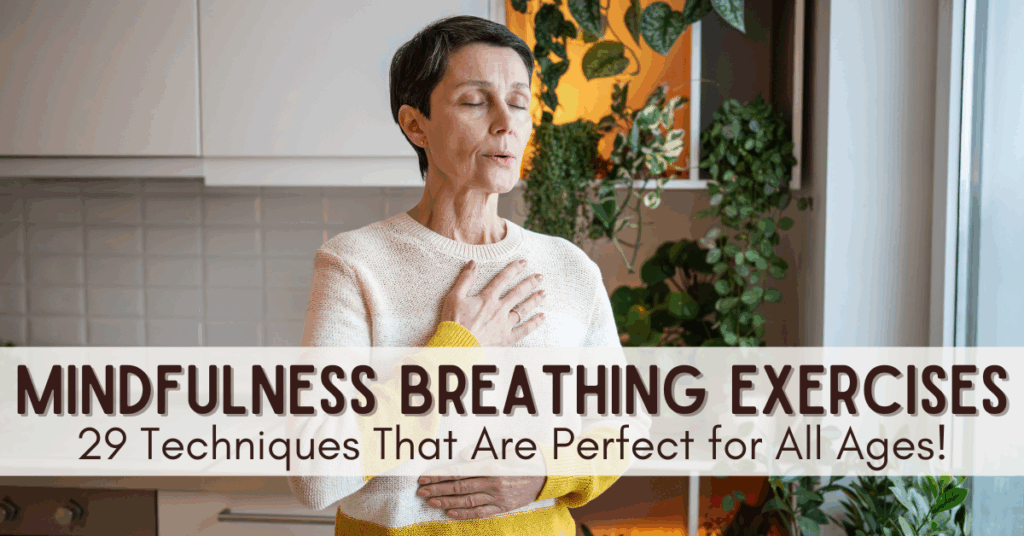
In a world that constantly pulls our attention in every direction, mindfulness breathing exercises offer a simple way to pause and reconnect. Through just a few intentional breaths, you can shift from stress and distraction to calm and clarity. These practices don’t require any special equipment, just your awareness and a few minutes of time.
In this post, we’ll explore different mindfulness breathing exercises you can use to relax, focus, and find balance. You’ll discover techniques suitable for both adults and children, creative ways to make breathing more engaging, and practical tips to help you build a mindful daily routine.
This post is all about mindfulness breathing exercises.
This post may contain affiliate links. We may earn a small commission at no extra cost to you—thank you for supporting what we do. We only share offerings we truly believe in.
What Are Mindfulness Breathing Exercises and How Do They Work?
Mindfulness breathing exercises are simple yet powerful practices that help you bring full attention to your breath. Rather than changing the breath forcefully, these exercises encourage gentle awareness.
When you focus on the natural rhythm of breathing, your attention shifts away from racing thoughts and settles into the present moment.
At a physiological level, mindful breathing activates the parasympathetic nervous system, the body’s natural relaxation response. As your breathing slows and deepens, heart rate and blood pressure begin to regulate, stress hormones decrease, and a sense of calm arises. This is why just a few minutes of breath awareness can transform how you feel, both physically and emotionally.
On a deeper level, mindfulness breathing exercises train the mind to pause and observe without reacting. Each breath becomes an anchor to the now, helping you recognize thoughts and emotions without getting swept away by them. Over time, this awareness builds resilience, clarity, and emotional balance.
In essence, mindful breathing is a bridge between the body and mind. Whether practiced for a few minutes a day or woven into meditation, these exercises invite presence, peace, and inner steadiness into everyday life.
Why Mindful Breathing Matters
Mindful breathing matters because the way we breathe directly affects how we think, feel, and respond to life. When breathing becomes shallow or rushed, the body stays in a mild state of stress. By slowing down and paying attention to each breath, you signal safety to your nervous system, easing tension and calming the mind.
Practicing mindful breathing also builds emotional awareness. It helps you notice what’s happening inside before reacting, creating space for clarity and compassion. Over time, this simple awareness strengthens focus, steadies emotions, and supports overall well-being.
Mindfulness Breathing Exercises
These simple breathing exercises help calm the mind, relax the body, and bring awareness to the present moment. Each one can be practiced anywhere, at any time, and offers a gentle way to center yourself through the rhythm of breath.
#1 Box Breathing
Inhale for a count of four, hold for four, exhale for four, and pause for four. You can imagine you are drawing a box as you breathe in and out. This structured rhythm quickly balances the nervous system and brings clarity and calm.
#2 Diaphragmatic (Belly) Breathing
Place one hand on your chest and one on your belly. As you inhale, let the belly rise while keeping the chest still. Then exhale slowly and feel the belly deflate. This encourages full oxygen exchange and soothes tension throughout the body.
#3 4-7-8 Breathing Technique
Inhale for four counts, hold for seven, and exhale for eight. This deep, slow pattern quiets the mind and helps prepare the body for rest. It’s often used for better sleep and relaxation.
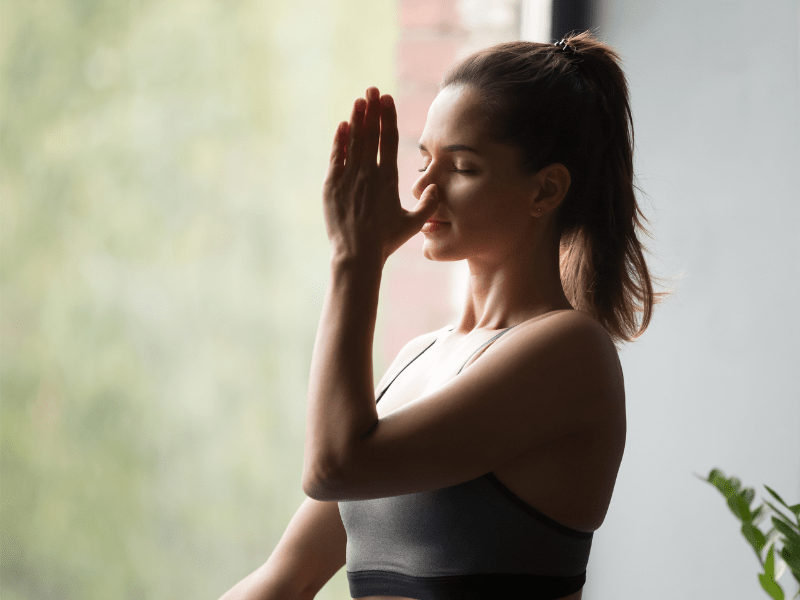
#4 Alternate Nostril Breathing (Nadi Shodhana)
Use the thumb to close one nostril and inhale through the other. Then switch and exhale through the opposite side. This yogic technique balances energy channels and restores mental equilibrium. Here’s a helpful video tutorial for visual learners or if you prefer to follow a guide.
#5 Counting the Breath to 10
Inhale and silently count “one,” exhale and count “two.” Continue up to ten, then start over. This simple counting anchors attention to the present moment and strengthens mindfulness.
#6 Ocean Breath (Ujjayi Pranayama)
Slightly constrict the throat as you inhale and exhale through the nose, creating a gentle ocean-like sound. This technique promotes focus, inner heat, and rhythmic calm. It’s especially supportive during meditation or yoga.
#7 Three-Part Breath (Dirga Pranayama)
Breathe first into the lower belly, then the ribs, then the upper chest, exhaling fully each time. This complete breath improves lung capacity and helps release emotional tension.
#8 Loving-Kindness Breath
Inhale compassion and peace, exhale stress and judgment. You can silently repeat phrases like “May I be calm, may I be kind.” It nurtures emotional openness and heart-centered mindfulness.
#9 Humming Breath (Bhramari Pranayama)
Inhale deeply and exhale with a gentle hum. The vibration calms the mind, activates the vagus nerve, and creates an immediate sense of relaxation.
#10 Equal Breathing (Sama Vritti)
Inhale and exhale for the same count — for example, 4 counts in and 4 counts out. This rhythmic balance calms the mind, steadies emotions, and is great for beginners or during meditation.
#11 Candle Flame Breath
Imagine a candle flame in front of you. Inhale slowly through the nose and exhale softly through the mouth without flickering the flame. It builds breath control and presence.
#12 Five-Sense Breathing
Take a slow breath and notice what you can see, hear, feel, smell, and taste in that moment. This practice anchors awareness through the senses, combining mindful breathing with grounding.
#13 Ladder Breathing
Breathe in, pause, and take in a little more air, as if climbing a ladder step by step. Exhale slowly all the way down. It strengthens lung capacity and focuses attention on each part of the breath.
#14 Gratitude Breath
With every inhale, think of something you’re grateful for; with every exhale, release tension or worry. This turns mindful breathing into an uplifting emotional reset.
#15 Resonance Breathing (Coherent Breathing)
Resonance breathing is about breathing at a slow, steady pace. Breathe in for 5.5 seconds and out for 5.5 seconds. This scientifically supported rhythm helps synchronize heart rate variability and promotes a deep sense of calm.
#16 Mindful Sigh
Take a deep breath in and release it with a slow, audible sigh. It instantly relieves tension and can be repeated anytime you feel pressure or mental fatigue.
#17 Silent Mantra Breath
Inhale silently repeating a word like “peace” or “calm”, exhale repeating “release” or “let go.” It links breath and intention for deeper mindfulness.
#18 Simple Breath Awareness
Sit quietly and observe each inhale and exhale without trying to control it. When the mind wanders, gently return to the breath. This is the essence of mindfulness.
Mindfulness Breathing Exercises for Students and Kids
Mindful breathing doesn’t have to be serious or complicated. It can also be fun, creative, and deeply engaging.
The following exercises are especially great for students and kids because they use imagination, visuals, or gentle movement to hold attention and make mindfulness feel playful. However, these practices aren’t just for children. Adults can benefit from them too!
#19 Feather or Leaf Breath
Give each child a small feather or leaf. As they exhale, they try to make it move gently without blowing it too hard. It teaches control, awareness, and soft exhalation.
#20 Animal Breathing Game
Turn mindful breathing into play: lion’s breath (big roar out tension), bunny breath (three quick sniffs, one long exhale), or snake breath (slow hiss). Kids love acting these out while learning control and awareness.
#21 Balloon Breath
Have children place their hands on their belly and imagine inflating a big balloon as they inhale, then slowly deflating it as they exhale. It’s a fun visual that teaches deep, diaphragmatic breathing.
#22 Rainbow Breath
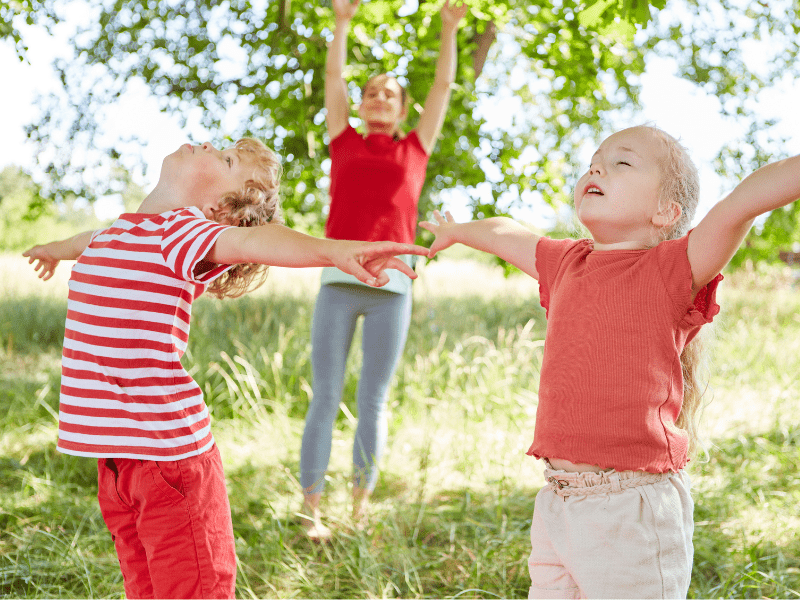
As they inhale, children raise their arms overhead to “draw” a rainbow in the air; as they exhale, they lower them back down. This adds movement and imagination to mindful breathing.
#23 Smell the Flower, Blow the Candle
A classic, simple cue: breathe in as if smelling a flower, breathe out as if blowing out a candle. It helps students remember to take slow, steady breaths and can be done anywhere.
#24 Bubble Wrap Breath
Have children hold a small square of bubble wrap (ideally made of recycled materials). With each exhale, press one bubble slowly. One breath, one pop. It combines breath awareness with a tactile, satisfying rhythm.
#25 Bee Breath (Bhramari)
Inhale gently through the nose, then exhale while making a soft humming sound like a bee. This vibration soothes the nervous system and is especially grounding for restless energy.
#26 Buddy Breathing
In pairs, children sit back-to-back and try to match their breath rhythm. It builds awareness, empathy, and teamwork through simple connection.
#27 Teddy Bear Belly Breathing
Ask children to lie down with a small stuffed animal on their belly. They watch it rise and fall with each breath. This makes deep breathing visible and calming, especially for younger kids.
If you’re in the classroom, you can also use any small object that students can balance and watch on their belly.
#28 Five-Finger Breathing
Have kids hold out one hand and trace each finger with the other. Breathe in as they trace up a finger and out as they trace down. It’s simple, tactile, and works beautifully in classrooms for quick reset moments.
#29 Heartbeat Breath
Place a hand on the heart and breathe slowly while feeling it beat. Notice how the heartbeat slows with calm breathing. For extra fun, you do some simple exercises to raise their heart rate beforehand, like jumping jacks or running in place. This helps children make the connection between breath and body.
Tips for Using Mindfulness Breathing Exercises
Start small and stay consistent
Begin with just a few minutes a day. Even one or two mindful breathing breaks can calm your mind and reset your focus. Over time, short and consistent practice works better than long, irregular sessions.
Find a comfortable position
Sit or lie down in a way that allows your body to relax but stay alert. A straight spine and relaxed shoulders help your breath flow naturally.
Practice at regular times
Try linking your breathing exercises to daily routines like after waking up, before sleep, or during study or work breaks. Regularity helps your body associate these moments with calm and focus.
Let go of perfection
Your mind will wander, that’s normal. When it does, simply notice it and return to the breath. The goal isn’t to control your thoughts but to build gentle awareness.
Listen to your body
Every day feels different. Some days your breath might be deep and steady, while other times it feels shorter or more restless. Let your body guide the pace and depth of your breathing instead of forcing it. Mindfulness works best when it meets you where you are.
This post was all about mindfulness breathing exercises.
Want more mindfulness and sound-inspired practices? Subscribe to our newsletter for guided exercises, event updates, and free printables straight to your inbox.


