
How to Meditate in Bed: 11 Simple Techniques & Tips for Beginners
Looking for an easy way to bring more calm and clarity into your day? Learning how to meditate in bed might be the simplest place to start!

Meditation doesn’t have to happen on a cushion or in a quiet corner. Sometimes, the most accessible place to practice is right where you already are: your bed.
Learning how to meditate in bed offers a simple way to bring mindfulness into your mornings or ease into restful sleep at night. Whether you want to start the day with a calm, grounded mind or unwind after a long evening, meditating in bed can meet you exactly where you are.
Over the years, I’ve explored many different ways to build a consistent meditation practice. Bed meditation has become one of the most effortless and transformative habits for me, especially during busy or stressful seasons of life.
In this guide, discover why meditating in bed can be so powerful, how to do it effectively, and simple techniques to help you get started. No complicated routines or special equipment needed.
Whether you’re completely new to meditation or looking for an easier way to fit it into your day, you’ll find approachable steps to begin.
This post is all about how to meditate in bed
This post may contain affiliate links. We may earn a small commission at no extra cost to you—thank you for supporting what we do. We only share offerings we truly believe in.
Why Meditate in Bed?
Meditating in bed offers a gentle, accessible way to bring mindfulness into your daily routine. Whether you’re starting the morning with a calm, focused mindset or winding down after a long day, meditating in bed helps bridge the gap between rest and awareness.
For many, lying comfortably under the covers creates the perfect environment to relax the body and quiet the mind.
Bedtime meditation can ease racing thoughts, reduce stress, and prepare you for deeper, more restful sleep. In the morning, a few mindful moments in bed can help you set clear intentions, invite gratitude, and create a peaceful foundation for the day ahead.
If you’re looking for a simple practice that doesn’t require a meditation cushion or special setup, learning how to meditate in bed can be a perfect solution. It allows you to practice mindful relaxation exactly where you are, making it easier to build consistency.
Whether you seek better sleep, a calmer start to your morning, or a few quiet minutes of self-connection, how to meditate in bed becomes a powerful tool to support your well-being in a natural, effortless way.
Is It Ok to Meditate Lying Down?
In many traditional meditation practices, especially those rooted in Eastern traditions like Buddhism, yoga, and Hindu philosophy, sitting upright is considered essential. The reason is more than just physical — it’s energetic.
An upright posture, with the spine naturally aligned, is believed to create an open pathway for prana or life force energy to flow upward through the body’s central channel, known as the sushumna nadi. This upward flow is thought to support higher states of awareness and inner clarity.
Sitting also strikes a balance between relaxation and alertness. Relaxed enough to be still and receptive, but alert enough to remain conscious and aware, rather than drifting into sleep. The posture itself becomes a symbol of the meditative state: awake, grounded, and connected both to the earth and to higher consciousness.
However, not all meditation is aimed at reaching states of deep concentration or transcendence.
In modern mindfulness and relaxation practices, lying down is not only acceptable — it can be beneficial, depending on your intention. If your goal is to relax the body, calm the nervous system, release stress, or prepare for sleep, lying down provides a sense of ease that supports those needs.
For example, bedtime meditation or body scan practices often encourage lying down to facilitate deep relaxation and to help transition naturally into sleep. Similarly, if you’re practicing mindfulness in bed in the morning to set a gentle, grounded tone for the day, a lying position may feel more accessible and less rigid.
The key is intention. If your purpose is to cultivate alert mindfulness, focused awareness, or deeper states of meditation, sitting upright is traditionally recommended. But if your purpose is relaxation, rest, or gentle self-connection, learning how to meditate in bed while lying down can be a valuable and supportive practice.
Ultimately, the best posture is the one that aligns with your purpose — whether you sit tall with your spine reaching toward the sky, or lie back and let the earth fully support you.

How to Meditate in Bed: Simple Techniques
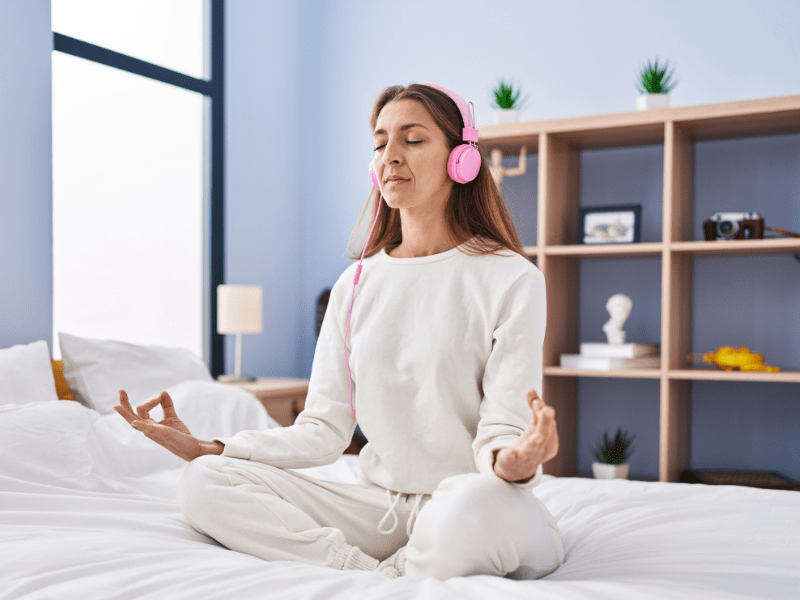
Meditating in bed can be as simple or as structured as you want it to be. Whether you’re beginning the day with a few mindful breaths or ending it with a deep body scan, the key is choosing a technique that matches your intention — relaxation, focus, or inner stillness. Here are a few simple ways to practice how to meditate in bed.
#1 Mindful Breathing
Start by gently closing your eyes and bringing attention to your breath. Notice the way the air moves in and out, without trying to change it. If your mind wanders, softly return your focus to the rhythm of your breathing. This simple awareness can calm the nervous system and center your mind, whether you’re waking up or preparing for sleep.
#2 Body Scan Relaxation
Lying down, bring awareness to each part of your body, starting from your toes and moving upward. As you notice each area, consciously release any tension you find. A body scan can help release the day’s stress or bring a deeper sense of presence first thing in the morning.
#3 Guided Meditation
If it’s difficult to focus on your own, try listening to a guided meditation. Many apps and recordings are designed specifically for bedtime meditation or morning mindfulness. A gentle voice can lead you through relaxation exercises, visualization, or breathwork, helping you stay on track.
#4 Visualization Practice
Imagine a peaceful scene — a quiet forest, a soft ocean wave, a place where you feel completely at ease. Engage your senses: hear the sounds, feel the textures, smell the air. Visualization can shift your mind from busyness into calm, setting a restful tone at night or a positive one for the day ahead.
#5 Mantra or Affirmation Meditation
Silently repeat a calming word, phrase, or affirmation. Something simple like “I am at peace” or “I welcome today with calm” can create a steady rhythm for the mind to rest on. This practice can be grounding at both ends of the day.
#6 Gratitude Reflection
Before getting out of bed or winding down, reflect on a few things you’re grateful for. Bringing your awareness to appreciation can lift your mood, set a positive tone, and align your mind toward the good that already exists in your life.
#7 Letting Go Practice (Evening)
At night, mentally review the day and gently release any lingering worries or tensions. Imagine them melting away or dissolving as you exhale. This creates space for restful sleep and clears mental clutter.
#8 Counting the Breath
A simple but powerful way to stay focused. Inhale slowly and count “one,” exhale and count “two,” and continue up to ten — then start over. If your mind wanders, gently return to “one.” This builds concentration and can also calm anxious thoughts before sleep.
#9 Mindful Listening
Focus on the ambient sounds around you — the hum of a fan, distant traffic, birdsong, even your own breathing. Simply listen without labeling or judging. Mindful listening helps anchor you in the present moment and can make bed meditation feel more alive and grounded.
#10 Breath Holding (Box Breathing)
Inhale for 4 counts, hold for 4 counts, exhale for 4 counts, hold again for 4 counts. Box breathing is deeply calming and can regulate the nervous system — useful if you’re lying in bed and feeling restless or anxious.
#11 Noting or Labeling Thoughts
As thoughts arise, simply label them gently: “thinking” or “feeling” and let them go. It creates a sense of detachment from the mental chatter, making it easier to relax into sleep or start the morning with a clear mind.
For example, if a thought about your to-do list comes up, label it “thinking.” If you notice a sense of restlessness in your body, label it “feeling” and return your attention to the breath.
Tips to Effectively Meditate in Bed
While meditating in bed is simple, a few small adjustments can help you get the most out of your practice. These gentle tips can make your sessions more intentional, whether you’re waking up or winding down.
Set a Clear Intention
Before you begin, quietly decide what you hope to experience — relaxation, focus, gratitude, or simply being present. Having an intention helps guide your mind and gives your practice direction.
Find a Comfortable, Supportive Position
Adjust your pillows, blankets, or sleeping position so you feel at ease but not overly relaxed. If you’re meditating in the morning or want to avoid falling asleep, prop yourself up slightly with a pillow behind your back. This keeps you comfortable but more alert.
Depending on your goal, you may also consider using a soft sleep mask or a calming essential oil to create a more peaceful environment.
Explore Yoga Nidra
If your goal is deep rest or stress relief, consider practicing Yoga Nidra — a guided meditation technique designed to bring the body into profound relaxation while keeping the mind aware. Yoga Nidra is especially effective for evening meditation or for calming the nervous system after a long day.
Limit Distractions
Dim the lights, silence your phone, and create a calm atmosphere. A peaceful environment helps you settle into stillness more easily, whether you’re using guided meditation or practicing on your own.
Try a Guided Meditation App or Video
If you find it hard to focus, guided meditations can offer gentle structure and support. Apps like Insight Timer or Calm have meditations specifically designed for morning mindfulness and bedtime relaxation. Headspace is one of the best apps for guided meditations but can be a bit costly.
YouTube also has a wide selection of free guided meditations for sleep, breathing, and gratitude. One of the most popular guides to listen to is Louise Hay who has a huge variety of meditations for morning and evening. This 24 minute meditation is great for waking up in the morning and designed to be listened to while still in bed.
Be Consistent
Meditating at the same time each day — morning or night — helps build a natural rhythm. Over time, your mind and body will begin to associate meditation with stillness and ease. Even five to ten minutes of mindful breathing or body awareness can shift your state of mind and help you reconnect.
Some days your mind will wander; some days it will be still. Try not to judge your practice. Simply showing up is enough. Trust that with time, your meditation will deepen naturally.
Common Mistakes to Avoid
Getting Too Comfortable
While comfort is important, getting too cozy can lead to drifting off. If your goal is to stay mindful and awake, prop yourself up slightly or adjust your position to find a balance between ease and alertness.
Skipping Intention Setting
Without a clear intention, it’s easy for meditation to become just lying in bed daydreaming. A simple intention like “I’m here to relax” or “I’m here to center myself” can guide your mind back when it drifts.
Expecting Instant Results
Meditation is a gradual process. If you expect immediate calm or perfect focus, you might feel discouraged. Approach your practice with patience, knowing that the benefits build over time.
Meditating with Too Many Distractions
Having your phone nearby, background noise, or bright lights can pull your attention away. Setting up a calm, quiet environment helps create the right conditions for stillness.
Judging Your Practice
It’s easy to get caught in self-criticism if your mind wanders or if you don’t feel immediately relaxed. Try to notice these thoughts without judgment and gently return to your focus. Meditation isn’t about doing it perfectly — it’s about showing up.
This post was all about how to meditate in bed.
Ready to make meditation a natural part of your morning or evening routine? Start with just a few minutes in bed each day and see how it transforms your sense of calm and clarity. For more simple mindfulness tips and guided practices, be sure to explore our latest resources or subscribe to stay connected!


