
Meditation Bell: Types, Uses, and How to Choose the Right One
Have you ever wondered which meditation bell is right for your practice? From traditional bells to modern chimes, there are more options than most people realize.
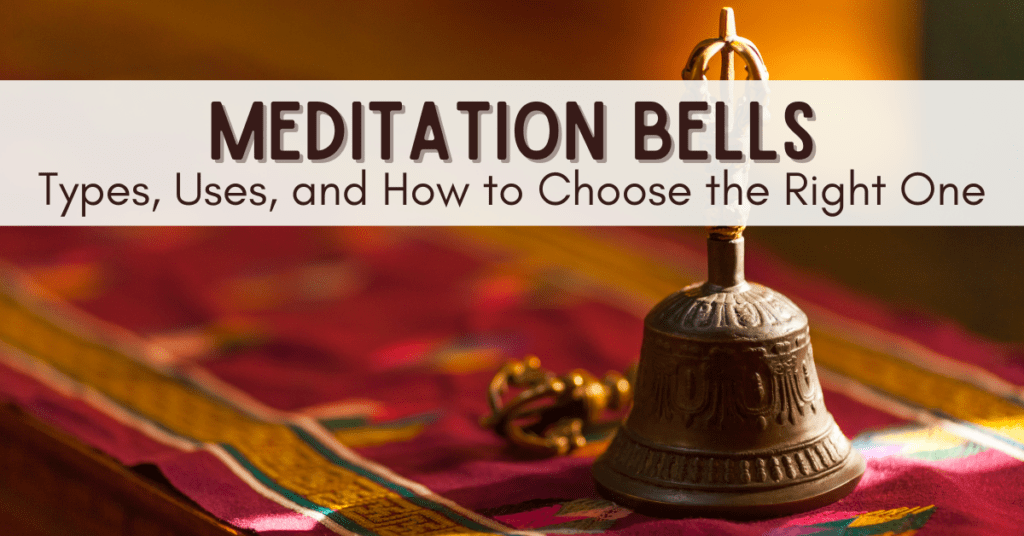
A meditation bell is a simple tool, but it can play an important role in meditation, mindfulness, yoga, and other reflective practices. From traditional meditation bells such as tingsha bells and Tibetan hand bells to more modern chimes, these instruments are often used to mark transitions, support focus, and create a calmer atmosphere for practice.As a sound practitioner and yoga teacher, I work with sound as a way to support presence, relaxation, and deeper awareness. Over the years, I have seen how even a simple instrument like a meditation bell can help shape the energy and flow of a practice.
In this guide, you will learn what a meditation bell is, the main types of meditation bells, and how each one is used. We will also look at how to choose the right meditation bell, the best meditation bell for beginners, practical ways to use one in your practice, and a few common questions people have before buying or using one.
This post is all about meditation bells.
This post may contain affiliate links. We may earn a small commission at no extra cost to you—thank you for supporting what we do. We only share offerings we truly believe in.
What Is a Meditation Bell?
A meditation bell is a bell or bell-like instrument used to support meditation, mindfulness, yoga, and other reflective practices. It is often rung at the beginning or end of a session, or at certain points during the practice, to create a clear moment of attention.
People use meditation bells in different ways, but the purpose is usually simple. The sound can help signal a transition, bring the mind back to the present moment, or create a calmer atmosphere for practice. Some meditation bells have a bright, high tone, while others sound softer, deeper, or more resonant.
The term meditation bell can refer to a few different instruments, including tingsha bells, Tibetan hand bells, inkin bells, and modern meditation chimes. While they do not all look or sound the same, they are used in similar ways to support focus, stillness, and awareness.
Types of Meditation Bells
Tingsha Bells
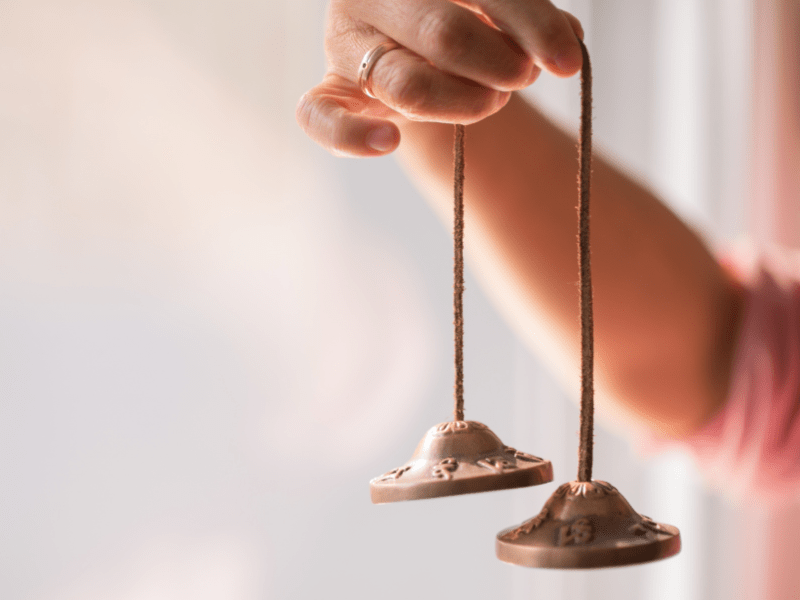
Tingsha bells are one of the most well-known types of meditation bells. They are a pair of small metal cymbals connected by a leather strap or cord. Instead of being rung like a hand bell, they are gently struck together to create a clear, bright tone.
They are often used to mark the beginning or end of a meditation, signal transitions during a practice, or bring attention back when the mind starts to wander. Because the sound is sharp and lingering, many people find that tingsha bells naturally cut through mental noise and create a strong point of focus.
Tingsha bells are commonly associated with Tibetan Buddhist traditions. However, today they are also widely used in yoga classes, mindfulness practices, and sound-based work.
Compared to some other meditation bells, their sound is usually higher in pitch and more piercing, which makes them especially useful when you want a tone that is easy to notice and clearly defined.
Tibetan Hand Bells
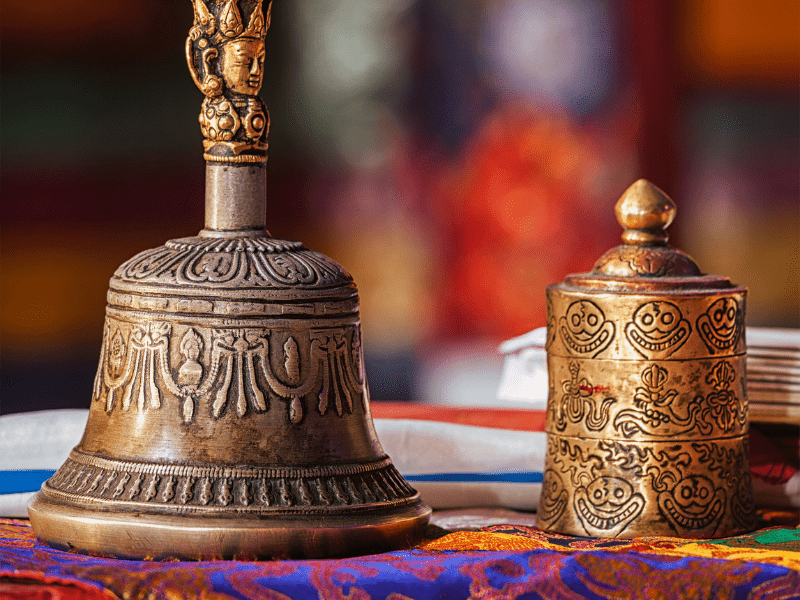
Tibetan hand bells are another type of meditation bell. But, they are different from tingsha bells in both shape and sound. Instead of being a pair of cymbals struck together, a Tibetan hand bell is a single bell with a handle that is held and rung by hand. It usually has a softer, fuller tone than tingsha bells.
These bells are often used in Tibetan Buddhist ritual and spiritual practice. They are also used today in meditation, sound work, and personal practice. Some people ring them to open or close a session, while others use them more ceremonially or as part of a longer practice. The sound tends to feel less sharp than tingsha bells and more rounded or resonant.
Tibetan hand bells can also vary in size, and that usually affects the sound. Smaller bells often have a lighter, higher tone, while larger bells tend to sound deeper and more resonant. For someone exploring meditation bells, they can be a good option if they prefer a gentler sound and a more traditional bell form.
Inkin Bells
Inkin bells are a more traditional and less widely known type of meditation bell. They come from Japanese Buddhist practice and are typically small hand-held bowl bells attached to a handle. Instead of being shaken like a regular bell, they are struck with a small striker.
The sound of an inkin bell is usually clear, bright, and sustained. It tends to have a clean tone that lingers for a while after it is struck, which gives it a focused and ceremonial feel. Compared with some other meditation bells, the sound often feels simple, precise, and very intentional.
Inkin bells are often used in Zen practice to signal transitions or mark specific moments within ritual. For many meditators, they will probably feel more niche than tingsha bells or Tibetan hand bells. It may not be the first option a beginner chooses, but it is useful to know about because it shows how many different bell traditions exist within meditation and Buddhist practice. It’s also a more unique option.
Modern Meditation Bells
Today, there are many modern sound tools used in meditation and mindfulness practices that serve a similar purpose as traditional meditation bells. While they may look or sound different, they are often used to mark transitions, support focus, and create a meditative atmosphere. Many people also like using instruments such as singing bowls and gongs as part of their practice.
Hanging Tingsha Bell
A hanging tingsha bell is a more modern variation of the traditional tingsha. Instead of holding two small cymbals by a cord and striking them together, the bells are suspended from a stand or frame and played with a striker.
This gives a similar bright, clear tone, but in a format that feels more like a desktop chime and can be easier to use in a home, studio, or meditation space.
Because of that setup, a hanging tingsha bell can feel more decorative than a traditional tingsha. It can still serve a similar purpose in practice. People may use it to open or close meditation, mark transitions, or create a simple moment of focus.
Hand Chime
A hand chime is a simple sound tool that creates a single clear tone when struck with a mallet. Unlike traditional meditation bells, it often has a more modern design, but it serves a similar purpose in practice.
Hand chimes are commonly used in meditation, yoga, classrooms, and mindfulness settings to mark transitions, bring attention back to the present moment, or create a calm pause. One common example is a single-bar chime struck with a mallet rather than a bell that is rung by hand.
The sound of a hand chime is usually clean, bright, and sustained. It tends to feel simple and easy to recognize, which is part of why many people like it for guided practice.
For beginners, a hand chime can be an approachable option. It’s easy to play, does not require much technique, and fits well in many different spaces.
How to Choose the Right Meditation Bell
The right meditation bell depends on how you plan to use it and what kind of sound you enjoy most. Some people want a bright, clear tone that immediately catches attention, while others prefer something softer, deeper, or more subtle. Since the sound is the main part of the experience, it helps to listen to examples when possible rather than choosing based on appearance alone.
You may also want to think about where and how the bell will be used. A small tingsha bell or hand chime can work well for personal meditation at home. A larger bell or chime may be better for yoga classes, group settings, or guided practice. Size, material, and design can all affect the sound. It is worth choosing something that feels good to use and fits the setting.
It can also help to consider whether you want something more traditional or more modern. Traditional bells such as tingsha or Tibetan hand bells may appeal to people who want a stronger connection to older practices, while modern chimes can feel simpler and easier to use. Neither is automatically better. It really comes down to the kind of experience you want to create.
Best Meditation Bell for Beginners
For beginners, the best meditation bell is usually easy to play and pleasant to hear. If a bell feels awkward to use or the tone feels too harsh, there is a good chance it will not become part of a regular practice. Starting with something simple often makes the most sense.
A hand chime can be a good beginner option because it is simple to use and creates a clear tone. Tingsha bells can also work well for beginners, especially for those who want a more traditional bell. The main thing is to choose a bell that feels approachable, pleasant, and easy to return to as part of your practice.
How to Use a Meditation Bell in Your Practice
A meditation bell can be used in very simple ways, whether you are ringing a physical bell yourself or using audio recordings in a guided practice or meditation app. Many people use the sound to begin a session, mark transitions, or bring attention back to the present moment.
To Begin a Meditation Session
Ring the meditation bell at the start of your practice to mark the shift from everyday activity into a more focused and quiet state. This can help create a clearer sense of intention before you begin.
To End a Meditation Session
Many people also use a meditation bell at the end of practice. It gives a gentle signal that the session is complete. It can also help you return to the rest of your day more mindfully.
To Mark Time During Silent Meditation
A meditation bell can be rung at set intervals during silent practice. This can be useful if you want gentle structure without checking a clock or using a spoken timer.
To Bring Attention Back to the Present Moment
If your mind feels scattered or distracted, the sound of the bell can act as a cue to return. This is one of the simplest and most common ways to use a meditation bell in mindfulness practice.
To Open or Close a Yoga Class
In yoga settings, a meditation bell can be used to begin class, close a final relaxation, or mark a transition between different parts of the practice. It helps create a calmer and more intentional atmosphere.
To Support Breathwork or Guided Practice
Some people use a meditation bell before or after breathwork, guided meditation, or yoga nidra. The sound can help frame the practice and make the experience feel more complete.
As Part of a Daily Ritual
A meditation bell does not have to be reserved for long formal practice. It can also be used as part of a simple daily ritual to pause, reset, and create a moment of stillness.
During Chanting or Mantra Practice
A bell can signal the start of chanting and help set the tone for the practice. It also be used between each repetition.
For Children or Classroom Mindfulness
A bell can be used as a simple listening cue, like inviting everyone to stay quiet until the sound fully fades.
FAQ
What is the best meditation bell for home practice?
The best meditation bell for home practice is usually one that has a sound you enjoy and feels easy to use regularly. For many people, a small tingsha bell or hand chime is a practical place to start.
Are meditation bells and tingsha bells the same thing?
Not exactly. Tingsha bells are one type of meditation bell. The term can also include Tibetan hand bells, inkin bells, and really any other bell used in meditation.
Do I need a meditation bell to meditate?
No, a meditation bell is not necessary for meditation. It is simply a tool that some people find helpful for marking the beginning and end of practice or bringing more focus to the experience.
What does a meditation bell sound like?
That depends on the type. Some meditation bells have a bright, high tone, while others sound softer, deeper, or more resonant.
This post was all about meditation bells.
Enjoy exploring sound-based practices? Join the newsletter for new blog posts, resources, and updates!


