
53 Mindfulness Activities for Kids (That They’ll Love!)
Looking for fun and meaningful ways to teach mindfulness? These tried-and-true mindfulness activities for kids are perfect for bringing calm into any space!
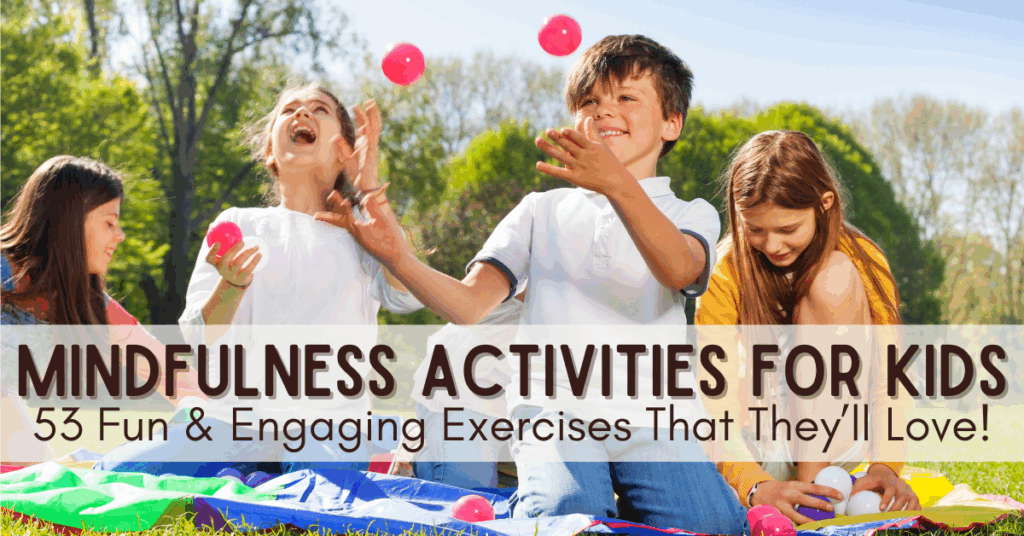
Looking for mindfulness activities for kids that are fun, engaging, and easy to try? Whether you’re a parent, teacher, or caregiver, introducing mindfulness to children can help them build emotional awareness, reduce stress, and develop focus—all through playful and accessible experiences.
As someone who has led mindfulness sessions for children in schools, wellness programs, and group settings, I’ve seen firsthand how simple practices like mindful breathing, movement, and sensory games can create real shifts in energy, attention, and calm.
In this post, you’ll find a wide range of kid-friendly mindfulness exercises—from group games to nature walks, creative art activities, partner practices, and more.
These ideas are organized into easy-to-follow categories, so you can find the right activity for any moment—whether you’re looking to energize a group, calm a restless classroom, or simply bring kids back to the present.
This post is all about mindfulness activities for kids.
TABLE OF CONTENTS
Why Mindfulness Matters for Kids
How to Use These Mindfulness Activities for Kids
Mindfulness Activities for Kids (Divided into 7 Themes):
Fun & Engaging Activities
Simple, No-Prep Activities
Movement-Based Activities
Outdoor Activities
Food & Drink Activities
Partner Activities
Group Activities
This post may contain affiliate links. We may earn a small commission at no extra cost to you—thank you for supporting what we do. We only share offerings we truly believe in.
Why Mindfulness Matters for Kids
Mindfulness isn’t just for adults—it’s a powerful tool for children, too. When kids practice being present, even in simple ways, they begin to build emotional awareness, improve focus, and develop the ability to self-regulate during challenging moments.
In a world that often feels fast and overwhelming, mindfulness gives children a way to pause, notice how they’re feeling, and respond with greater calm and clarity. Studies have shown that regular mindfulness practice can support reduced anxiety, better sleep, improved attention, and stronger emotional resilience in children.
It doesn’t have to be complicated—playful and age-appropriate activities are often the most effective. Whether it’s through breath, movement, or sensory awareness, mindfulness can help kids feel more connected to themselves and the world around them.
How to Use These Mindfulness Activities
These mindfulness activities for kids are designed to be flexible, fun, and easy to integrate into daily routines—whether you’re at home, in a classroom, or outdoors. There’s no one “right” way to do them.
The key is to approach each activity with openness and curiosity, rather than trying to make it perfect. Invite children to explore at their own pace and allow space for whatever they experience, whether it’s stillness, giggles, or questions. You don’t need to force quiet or stillness—instead, let the activities guide them gently into presence.
Practicing alongside your child or students can also be powerful; kids often tune into your energy more than your words. Try starting with just a few minutes a day and build from there. Over time, these small moments can create lasting habits of awareness, connection, and calm.
Mindfulness Activities for Kids
Kids will love these 53 mindfulness activities that feel like play! This list is organized into different seven themes: (1) Fun & Engaging Activities, (2) Simple, No-Prep Activities, (3) Movement-Based Activities, (4) Outdoor Activities, (5) Food and Drink Activities, (6) Partner Activities and (7) Group Mindfulness Activities for kids.
Fun & Engaging Activities
#1 Bubble Breathing
Hand kids bubble wands and have them blow slow, steady breaths to make the biggest, gentlest bubbles possible. They focus on the breath and watch each bubble float and pop. It’s calming, playful, and sensory-rich.
#2 Mindful Balloon Game
Give each child a balloon and have them try to keep it in the air using only one finger. Encourage them to move slowly and with control, focusing fully on the movement. It’s silly but teaches balance, patience, and concentration.
#3 Color Match Walk
Send kids around the room or outdoors to find something that matches a color you call out—blue, green, yellow, etc. When they return, they describe what they noticed about their object. This turns observation into a fun scavenger-style activity.
#4 Mandala Coloring or Creation
Provide printed mandalas or let kids make their own using natural objects (leaves, flowers, sticks) arranged in circular patterns. They work quietly and with intention, focusing on symmetry, detail, and flow.
#5 Mindful Drawing with Eyes Closed
Give each child a crayon or pencil and ask them to draw slowly with their eyes closed for one minute, just noticing the feeling of the movement. Afterward, they open their eyes and observe their drawing without judgment. It’s about the experience, not the result.
#6 Texture Hunt
Ask kids to quietly explore the space and find three different textures—something rough, something smooth, and something soft. They close their eyes while touching each one and describe the feeling. This builds sensory awareness in a playful way.
#7 Mindful Domino Set-Up
If you have dominoes or blocks, invite kids to set them up slowly and mindfully, focusing on the sound and feel of each piece. When ready, they can knock them down and watch the chain reaction unfold with full attention.
#8 Guided Imagination Journey
Invite kids to lie down and close their eyes while you guide them on a short story (“You’re walking through a magical forest… the leaves glow… you hear soft sounds…”). Keep the tone calm and descriptive. It brings imagination into stillness.
#9 Mindful Jar (Glitter Calm Jar)
Fill a clear jar with water, glitter, and glue. Let kids shake it and watch the glitter slowly settle. As they watch, they take deep breaths and notice how their thoughts settle too. You can make one together or use a premade one as a focus tool.
#10 Breathing Buddies
Kids lie on their backs with a small stuffed animal on their belly. As they breathe in and out, they watch the buddy rise and fall. It gives them a visual cue for slow breathing and makes the practice feel cozy and safe.
#11 Sound Matching Game
Make or play different sounds using objects (shaking a jar of rice, tapping a spoon, clapping, etc.). Kids close their eyes, listen, and try to guess the source or replicate the sound themselves. This sharpens listening and memory in a playful way.
#12 Smell & Guess
Place various familiar scents (orange peel, cinnamon, mint, etc.) in jars or containers. Kids close their eyes and guess the scent using only their nose. It turns scent awareness into a fun guessing game.
#13 Texture Path
Create a walking path with different textures (e.g., towel, bubble wrap, yoga mat, soft cloth). Kids walk slowly across it barefoot, noticing how each step feels. Even with just two or three textures, this can be a powerful grounding experience.
Simple, No-Prep Mindfulness Activities
#14 Five Senses Check-In
Ask kids to pause and name: 5 things they can see, 4 they can touch, 3 they can hear, 2 they can smell, and 1 they can taste. It brings them into the present moment using their senses.
#15 Mindful Breathing
Have kids place one hand on their belly and take slow, deep breaths. They focus on the rise and fall of their hand as they inhale and exhale. This helps center their attention and calm the body.
#16 One-Minute Silence
Set a timer for one minute and invite kids to sit quietly with eyes closed or gently open. They simply listen, breathe, and notice what’s happening inside and around them. It’s a quick and powerful reset.
#17 Heartbeat Check
Ask kids to jump in place or do a quick run on the spot for 20 seconds. Then have them sit quietly, place a hand over their heart, and feel how fast it’s beating. As they breathe deeply, they notice it slowing down. It’s a fun way to connect movement with body awareness.
#18 Sound Safari
Ask kids to close their eyes and listen carefully for 30 seconds. Afterward, they share as many sounds as they heard—near, far, loud, or soft. This sharpens auditory focus and makes stillness more fun.
#19 Tense & Release Game
Turn progressive muscle relaxation into a game: “Squeeze your fists like you’re holding lemons! Now let them go… Let the juice drip out!” Go through the body with silly metaphors, helping kids build awareness of tension and release.
#20 Emotion Charades
Call out or show an emotion (like joy, anger, excitement, worry), and kids act it out silently with facial expressions and body language. Then they take a breath and return to neutral. This makes emotional recognition fun and physical.
Movement-Based Activities
#21 Mindful Walking
Kids walk slowly in a straight line or circle, paying close attention to how their feet feel with each step, how their arms swing, and the rhythm of their breath. This simple activity helps them connect body and mind through movement.
#22 Animal Stretch & Breathe
Children move through slow animal-inspired poses—like stretching tall like a giraffe, curling up like a turtle, or balancing like a flamingo—while taking deep breaths in each position. It brings playfulness and body awareness together.
#23 Shake & Settle
Have kids shake out their hands, arms, legs, and whole body for 10–15 seconds, then stand still with eyes closed to feel the after-effects. This contrast helps them release tension and notice how their body changes.
#24 Follow the Leader
One child leads with slow, mindful movements—like waving arms, bending, turning—while others follow. Emphasize moving with control and focus. It helps kids practice attention and coordination in a calm, playful way.
#25 Breath and Stretch Flow
Guide children through gentle movements like raising arms on an inhale and lowering them on an exhale. You can add twists, bends, or reaching from side to side. Pairing breath with motion brings calm focus to the body.
#26 Move Like the Weather
Call out different types of weather—like sunshine, wind, rain, or thunder—and have kids move in ways that match. Sunshine might be slow stretches, wind could be swirling arms, and thunder might be strong stomps. This encourages imagination while connecting movement to emotion and energy.
#27 Mindful Freeze Dance
Play music and let kids dance freely. When the music stops, they freeze and take a deep breath. You can also ask them to notice how their body feels in stillness. It’s a fun way to build awareness between action and rest.
#28 Rhythm & Movement Match
Play music with shifting tempos and invite kids to move to the beat—slow and smooth when the music is calm, quick and bouncy when it speeds up. This helps them stay present and tune into rhythm, body, and sound at once.
#29 Balancing Game
Ask kids to balance on one foot, in tree pose, or with arms outstretched like a plane. They hold the pose while breathing slowly and noticing how their body adjusts to stay stable. It builds focus, coordination, and patience.
#30 Stretch and Reach Game
Call out objects or shapes in the room (“Reach for the sky,” “Touch the floor,” “Stretch to the side wall”) and have kids move there slowly and with intention. It encourages mindful control and full-body engagement.
Outdoor Mindfulness Activities
#31 Nature Listening Walk
Take kids outside and walk slowly in silence, focusing only on the sounds around them—birds, leaves, wind, footsteps. After a few minutes, they can share what they noticed. This sharpens listening skills and brings awareness to the present moment.
#32 Cloud Gazing
Invite kids to lie on the grass and look at the sky, watching the clouds float and change shape. They can notice their breath as they relax and name shapes they see. It encourages stillness, imagination, and calm observation.
#33 Touch and Describe
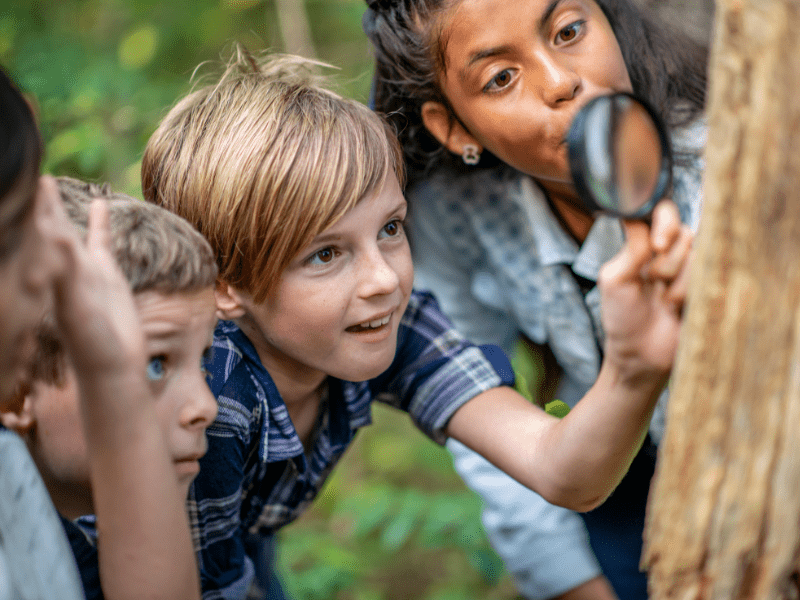
Have kids find a natural object—a leaf, rock, or stick—and explore it with their hands and eyes. Ask them to describe the texture, color, shape, and any patterns. This focuses attention on detail and sensory experience.
#34 Barefoot Walk
In a safe area like grass or sand, let kids walk barefoot slowly and notice the sensations on their feet—the coolness, texture, or pressure. It connects them physically and mindfully to the earth.
#35 Mindful Rock Stacking
Let kids collect a few small rocks and stack them slowly and carefully, noticing how each one feels and balances. They can take a breath between placing each rock. This turns a quiet outdoor activity into a meditative practice.
#36 Follow a Bug
Invite kids to choose a bug—like an ant or butterfly—and follow it quietly with their eyes or body (without touching it). Ask them to observe how it moves and where it goes. It’s a fun way to practice stillness and patient attention.
#37 Shadow Watching
Go outside when the sun is shining and have kids observe their shadow—how it moves, stretches, and changes shape as they move slowly. This playful activity brings body awareness into a natural setting.
Food & Drink Activities
#38 Mindful Eating with a Raisin (or Any Small Snack)
Give each child one raisin or small food item. Ask them to look at it closely, feel it, smell it, and finally place it on their tongue without chewing. After a moment, they chew slowly and notice the taste and texture change. You can guide them with questions like: What do you notice? What does it remind you of? This helps them fully experience one bite using all their senses.
#39 Savor-and-Describe Game
Offer small bites of different foods (like apple, cracker, cucumber). After tasting, have the kids describe it without naming it. Encourage words about texture, flavor, sound, or feeling—Is it rough? Juicy? Sweet? Crunchy? This builds awareness and expressive language while slowing down eating.
#40 Mindful Sipping with Warm or Cold Drinks
Use a warm drink (like milk or tea) or cool water. Ask kids to feel the cup, notice the temperature, smell the drink, and take small sips. Pause after each to notice the sensation in the mouth and body. This teaches awareness of internal sensations in a calming way.
#41 Chew and Count
Ask kids to take a bite and count how many times they chew before swallowing. You can suggest a number like 15 or just ask them to pay attention. Afterward, ask how that felt different than usual. It’s a simple way to slow down and tune into the body.
Partner Mindfulness Activities
#42 Mirror Movement
One child moves slowly—lifting arms, turning the head, or stretching—while their partner copies like a mirror. After a minute or two, they switch roles. This builds focus, body awareness, and quiet connection without needing words.
#43 Back-to-Back Breathing
Sitting back-to-back, kids close their eyes and notice each other’s breath. They try to match the rhythm by breathing in and out together. This creates a calming shared experience and strengthens connection through breath awareness.
#44 Pass the Pulse
One child gently squeezes the other’s hand once. The partner returns the same number of squeezes. You can vary the number or create a rhythm to follow. It turns a small touch into a focused and playful awareness game.
#45 Partner Walk
Two kids walk slowly side by side, trying to match their pace and steps without talking. They can also take turns leading while the other follows silently. This builds coordination, awareness of another’s rhythm, and focus on the body’s movement.
#46 Breath and Count
Sitting face-to-face, one child breathes deeply and the other counts their breath (inhalation and exhalation). Then they switch roles. This helps kids pay close attention and support each other’s focus and calm.
#47 Feel & Guess Object Game
One child places a small object in their partner’s hand (eyes closed). The partner explores it using only touch, then describes it before guessing what it is. This focuses attention on physical sensation and helps develop sensory awareness and trust.
Group Activities
#48 Group Listening Chain
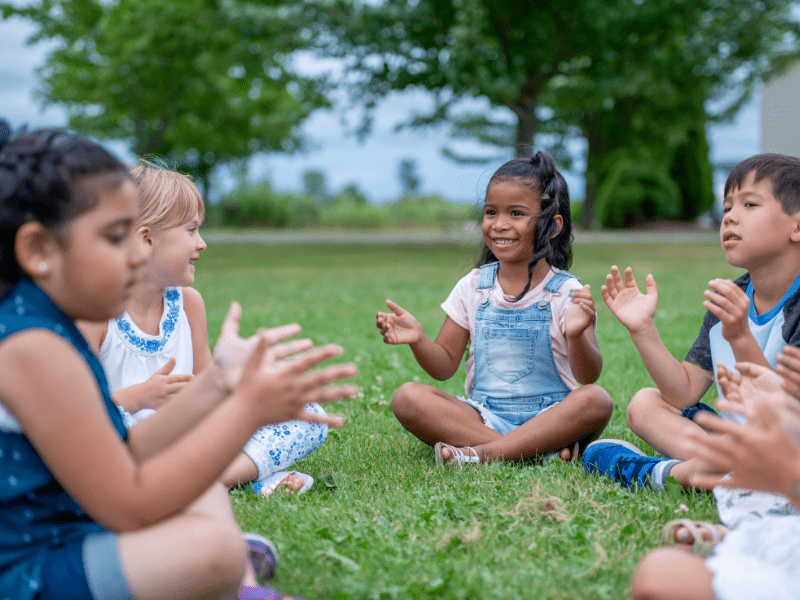
One child makes a soft sound (like a clap, hum, or finger snap), and it goes around the circle with each child repeating it exactly. After a few rounds, try new sounds or create short patterns. It builds deep listening and unity.
#49 Pass the Smile
One child turns to the next and gives them a slow, intentional smile. That child then turns and passes it on. It sounds simple, but it creates a warm atmosphere and teaches mindful expression and attention.
#50 Group Breath Sync
Everyone sits in a circle and watches one child lead the breath—raising their arms slowly on the inhale and lowering on the exhale. The group follows the visual cue, syncing breath and movement together. It creates collective rhythm and calm.
#51 Energy Ball Game
The group imagines passing an “energy ball” around the circle. The first child pretends to form a glowing ball between their hands, then passes it slowly with intention. Each person feels the weight or temperature of the imaginary ball before passing it on. This fosters group focus, imagination, and connection.
#52 Silent Signal Game
One child leaves the room. While they’re gone, the group chooses one leader who will begin a repeated silent motion (like tapping fingers or nodding slowly). When the child returns, they must guess who the leader is. It encourages quiet attention and shared focus.
#53 Ball of Gratitude
A soft ball is passed around the group. When a child receives it, they say something they’re grateful for—but it must be something new that no one else has said. This builds active listening, creativity, and appreciation.
This post was all about mindfulness activities for kids.
Want even more ways to bring mindfulness into your child’s day? Sign up for our newsletter for fresh ideas, printables, and guided audio practices delivered to your inbox.


