
Mindfulness for Students: 59 Classroom Activities to Build Focus and Calm
In a busy classroom, distractions and stress can build up quickly. Mindfulness for students offers a way to pause, reset, and re-engage with learning in just a few minutes a day!

Today’s students are growing up in a world full of constant stimulation. Screens, schedules, and social pressures can leave them feeling distracted and overwhelmed. Mindfulness for students offers a simple yet powerful way to help them slow down, focus, and approach their learning with a clearer, calmer mind.
Far from being just a trend, classroom mindfulness activities are supported by research showing improvements in attention, emotional regulation, and even academic performance.
In this post, you’ll discover a wide range of mindfulness exercises for students that can be woven seamlessly into the school day.
From quick, five-minute resets to engaging partner and whole-class practices, these ideas are designed to work in real classrooms with minimal preparation. Whether you teach in an elementary school, middle school, or high school, you’ll find practical ways to help your students build focus, resilience, and self-awareness.
This post is all about mindfulness for students.
TABLE OF CONTENTS
Why Mindfulness for Students is Important
Mindfulness in the Classroom:
5 Minutes (or Less) Mindfulness Activities for Students
Movement-Based Mindfulness Activities for Students
Creative Mindfulness Activities for Students
Sensory-Based Mindfulness Activities for Students
Whole Class Mindfulness Activities for Students
Small Group & Partner Mindfulness Activities for Students
How to Practice Mindfulness for Students Daily
This post may contain affiliate links. We may earn a small commission at no extra cost to you—thank you for supporting what we do. We only share offerings we truly believe in.
Why Mindfulness for Students is Important
Mindfulness for students plays an important role in supporting both academic success and emotional well-being. By learning to direct their attention to the present moment, students develop greater focus, patience, and self-awareness. These are skills that directly impact how they learn and interact in the classroom.
According to research, regular practice has been linked to improved concentration, stronger memory retention, and more effective emotional regulation. It can also help reduce anxiety, ease stress, and promote a calmer, more positive learning environment.
These benefits extend beyond academics, giving students tools to handle challenges in everyday life with more resilience and clarity.
Incorporating mindfulness into the school day ensures students aren’t just meeting educational goals but also building habits that will support their mental and emotional health for years to come. The best part is that mindfulness is simple to weave into lessons, transitions, or even a few spare minutes.
As teachers, we have a unique opportunity to guide students in developing these lifelong skills and to create a classroom culture where presence, focus, and emotional balance are valued just as much as academic achievement.
Ways to Practice Mindfulness for Students
These mindfulness exercises for students are divided into 6 categories: 5 Minutes (or less) Mindfulness Activities, Movement-Based, Creative, Sensory-Based, Whole Class, and Small Group & Partner mindfulness activities.
5 Minutes (or Less) Mindfulness Activities for Students
#1 Secret Sound Guess
Hide an object behind your back and make a noise with it (crinkle paper, tap wood, jingle keys). Students listen carefully and guess the sound.
#2 Quick Gratitude Burst
Go around the room and have each student say one thing they are grateful for — no explanations, just quick shares.
#3 Micro Mindful Drawing
Give students 1–2 minutes to draw something without lifting the pen from the paper, focusing entirely on the movement of the pen.
#4 Finger Tracing Breath
Students trace the outline of one hand with the other index finger, breathing in while tracing up a finger and out while tracing down.
#5 One-Minute Smile
Students close their eyes, smile gently, and hold it while taking slow breaths, noticing how it changes how they feel.
#6 Bell Fade Challenge
Strike a bell or chime and have students raise their hand when they can no longer hear it.
#7 Freeze & Notice
Teacher calls “Freeze!” — students pause, close their eyes, and notice 3 things they hear, 2 things they feel, and 1 thing they smell before resuming activity.
#8 Cloud Breathing
Students imagine breathing in a cloud of a favorite calming color, then exhaling stress as a gray cloud.
#9 Mindful Clapping Game
The teacher claps once, and students echo it exactly. Gradually change the rhythm and volume, keeping focus sharp.
Movement-Based Mindfulness Activities for Students
#10 Balance & Focus Challenge
Set up a “balance path” with tape lines, foam mats, or chalk outdoors. Students walk along slowly, balancing an object (like a beanbag) on their head or hands. Add pauses where they close their eyes for a few seconds before continuing.
#11 Mindful Walking Adventure
Have students walk slowly around the classroom, gym, or outdoor area, paying close attention to each step. You can add “mission cards” like walk as if you’re on the moon, walk like you’re balancing on a tightrope, or walk while noticing only sounds.
#12 Balloon Fun
Give each student a balloon and see how long they can keep it in the air — but here’s the twist: they can only use a specific body part (elbow, knee, or even head). Between rounds, pause for 3 breaths, noticing how their body feels after moving.
#13 Mindful Freeze Dance
Play calm, rhythmic music. Students dance freely, but when the music stops, they freeze and take 3 slow breaths, noticing their body position. The stop/start pattern keeps their attention sharp while allowing bursts of fun movement.
#14 Breath & Stretch Circuits
Create stations around the room, each with a different stretch or posture. At each station, students do 5 mindful breaths while holding the pose, then rotate. This gives a mix of movement and breath focus, and you can adapt for energy level.
#15 Tempo Walks
Play music with changing tempos and have students adjust their walking speed to match — slow and deliberate for a calm beat, light and quick for a fast beat. Between changes, pause and have them notice their breath and heartbeat.
#16 Balance Object Journey
Give each student a small object (rock, LEGO piece, cube, etc). They walk around balancing it on a body part — head, shoulder, or back of hand. You can add challenges like walking backward or pausing to take a deep breath without dropping it.
#17 Mindful Animal Parade
Students move around the room embodying different animals — slow turtle, graceful cat, stretching giraffe — but each change in animal is triggered by a mindfulness cue, like the teacher ringing a chime or saying “breathe and change.”
#18 Yoga Story Flow
Create a short story (e.g., A day in the jungle) and link yoga poses to different parts. Students “become” the characters or objects — tree pose for tall trees, downward dog for animals, cobra pose for snakes, etc. This keeps them moving while staying focused on breath and posture.
These fun yoga cards are a super great tool for the classroom. They have guided instructions on the back and can be used in so many ways. Use them while you’re telling a story or have a student pick a card for a quick exercise or transition activity.
#19 Invisible Paintbrush
Students “paint” the air with large, slow movements using an imaginary paintbrush in their hand, foot, or even elbow. Encourage them to picture the color and strokes in their mind while moving deliberately and breathing steadily.
Creative Mindfulness Activities for Students
#20 Positive Word Art
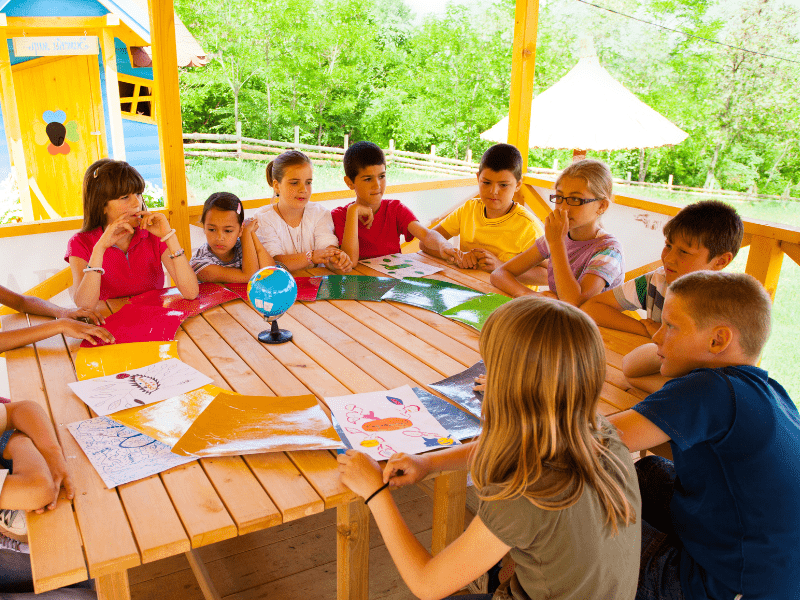
Students choose a word that makes them feel calm or happy (like peace, kind, hope) and create a decorated poster around it. They can add patterns, colors, or small drawings while reflecting on the meaning of the word.
#21 Mindful Doodle Time
Give students paper and markers or crayons, and have them slowly draw lines, shapes, or patterns without planning ahead. Encourage them to notice the sound of the pen on paper, the feel of the movement, and how the colors make them feel.
#22 Gratitude Collage
Students cut out pictures or words from old magazines that represent things they are grateful for. They arrange them into a collage, pausing after each image to take a slow breath and reflect on why they chose it.
#23 Emotion Masks
Using paper plates, markers, and craft materials, students create masks that represent a specific feeling (calm, joy, curiosity). They reflect on how they portrayed that emotion through color, lines, and shapes.
#24 Sensory Poetry
Guide students to write a short poem using their senses — what they see, hear, smell, feel, and taste in that moment. They focus on observation rather than rhyme or structure, making it accessible to everyone.
#25 Mandala Coloring
Provide mandala outlines (or let students draw their own) and ask them to color slowly, noticing patterns and colors as they fill in each section. Soothing background music can enhance focus.
#26 Mindful Clay Sculpting
Give students modeling clay or playdough. Ask them to create a shape or object that represents how they feel right now. The focus is on the texture, pressure of their hands, and the evolving form.
#27 Nature Mandala
If you can go outdoors, have students collect natural items like leaves, petals, sticks, and stones. They arrange them in a circular, repeating pattern on the ground, focusing on symmetry and colors. Encourage them to work slowly and notice textures and shapes.
#28 Group Story Quilt
Each student draws or paints a small square representing something meaningful to them. The squares are then displayed together like a “quilt,” showing the combined creativity of the group.
#29 Sound-Inspired Drawing
Play calming instrumental music or nature sounds, and have students draw shapes, lines, or patterns that match what they hear. They can switch colors or styles when the sound changes.
Sensory-Based Mindfulness Activities for Students
#30 Sensory Station Rotation
Set up four small stations: one for smell (scent jars), one for taste (small food samples), one for touch (texture objects), and one for sound (listening to instruments or sound clips). Students rotate and can make notes of what they observe at each station.
#31 Touch Mystery Bag
Place a variety of textured objects (soft scarf, bumpy ball, smooth stone, pinecone) into a bag. Students reach in, feel one object slowly, and describe it without looking — focusing on texture, shape, and temperature.
#32 Scent Exploration
Provide small jars or cotton balls with different scents (cinnamon, lavender, lemon, vanilla). Students close their eyes, take a gentle inhale, and describe the smell’s qualities and how it makes them feel.
#33 Texture Walk
Lay out different surfaces to walk on barefoot or with socks — yoga mats, towels, grass (if outdoors), bubble wrap, smooth boards. Students walk slowly, noticing each change in texture.
#34 Singing Bowl Listening
Ring a singing bowl or chime and have students raise their hand when they can no longer hear the sound. This helps them focus deeply on the duration and fading quality of sound.
#35 Mindful Raisin (or Fruit) Eating
Give each student a raisin, grape, or small piece of fruit. They observe it closely, smell it, feel its texture, and then eat it very slowly, noticing the taste and how it changes as they chew.
#36 Guided Scent-and-Story
Choose one scent (like peppermint). Students inhale deeply, then write or share a short imaginative story inspired by that smell — where it takes them, what they see, or who they meet.
#37 Flavor Guessing Game
Offer small samples of different safe foods (apple slice, cucumber, cracker, dried fruit). Students close their eyes, taste, and describe the flavor and texture before guessing what it is.
#38 Sound Map
Outdoors or by an open window, students close their eyes and mentally “map” where each sound is coming from (birdsong, footsteps, wind, traffic). They can draw the map during or afterward to visualize their listening.
#39 Bubble Breathing
Blow bubbles slowly and have students watch their movement, noticing shapes and colors. Let them blow their own bubbles mindfully, controlling their breath to create bigger or smaller bubbles. Students can try to gently catch the bubbles without popping them.
Whole Class Mindfulness Activities for Students
#40 Silent Ball
A soft ball is passed around the circle in complete silence. Students make eye contact before gently tossing it, focusing on slow, deliberate movements. The group works together to see how long they can keep it going without dropping or speaking. To make it harder, students can pass the ball across the circle without making a sound.
#41 Group Pulse
Students stand in a circle holding hands. One student starts a “pulse” by gently squeezing the next person’s hand, which travels around the circle. Try sending the pulse in both directions at the same time for extra focus.
#42 Shape Shifting
The class stands together and silently works to form shapes (a circle, square, star) without speaking — relying only on observation and awareness of others’ movements.
#43 Spoon Pass Challenge
While sitting in a circle, students pass a small ball, lemon, or similar object around using only spoons. The goal is to pass it slowly without dropping it, pausing to take a breath before passing. You can do this even with one spoon which the student balances and passes around.
For added fun, you can use a balancing bird toy that the students pass around on their finger. It takes focus and concentration while the kids love it!
#44 Web of Connection
Students sit or stand in a circle with a ball of yarn. One student holds the end, says something positive or mindful (e.g., “I’m grateful for…”), then gently tosses the yarn to another student. This continues until everyone is holding part of the string, creating a web. At the end, the group pauses to notice how everyone is connected.
#45 Hula Hoop Chain
Students stand in a circle holding hands, with a hula hoop hanging on one person’s arm. Without letting go of hands, they work together to move the hoop all the way around the circle, stepping and bending mindfully.
#46 Silent Line-Up
Students must arrange themselves in a line based on a category (birthdays in order, height, alphabetical by first name) without talking. They can only use gestures, facial expressions, or quiet signals, encouraging observation and cooperation.
#47 Class Breathing Wave
Students sit or stand in a circle. One person begins by taking a deep, slow breath, and the next person starts their breath just as the first person begins to exhale, creating a “wave” of breathing around the circle.
#48 Mindful Group Drawing
Place a large sheet of paper in the center. One student starts by drawing a small, slow shape or line, then passes the marker. Everyone adds to the drawing one by one, pausing to observe what’s already there before adding.
#49 Team Balance Challenge
Form a circle holding hands. The group slowly shifts weight side to side or forward and backward, keeping the circle stable. This builds awareness of others’ movements and teamwork.
Small Group & Partner Mindfulness Activities for Students
#50 Partner Mirror Movement
In pairs, one student makes slow, gentle movements (stretching arms, turning head, shifting weight) while the other mirrors them exactly, keeping eye contact when possible. Switch roles after a few minutes.
#51 Breathing Buddy
Partners sit back-to-back and try to match their breathing so they inhale and exhale at the same time. They can place a small stuffed toy between their backs and try to keep it from falling as they breathe.
#52 Partner Sound Game
One partner creates a short, soft sound (humming, snapping, tapping) and the other repeats it exactly. They switch, gradually creating a “sound conversation.”
#53 Trust Walk
One partner closes their eyes while the other guides them around a safe space using only gentle verbal instructions or by lightly touching their shoulder or elbow. Then they switch roles.
#54 Drawing Relay
Pairs share one piece of paper. One partner draws for 30 seconds, then the other continues, building off what’s already there. The process repeats for several rounds, with a short pause to notice details before drawing.
#55 Mindful High-Five
Partners give each other a slow-motion high-five, paying attention to the sensation of touch, timing, and eye contact. They repeat a few times, keeping movements calm and intentional.
#56 Object Description Challenge
One partner closes their eyes while the other describes a small object in detail (size, shape, texture, weight) without naming it. The listening partner then tries to guess or draw what they think it is.
#57 Shared Mindful Lego Build
Pairs get a small pile of LEGO pieces or blocks. Without talking, they work together to build something, paying close attention to the other’s movements and choices.
#58 Emotion Charades
One partner silently acts out an emotion (calm, curious, excited) in slow motion. The other guesses and then mirrors the emotion back in the same slow, mindful way.
#59 Back Drawing Guess
One partner gently “draws” a simple picture or shape on the other’s back using their finger. The partner tries to guess what it is and then draw it on paper. Switch roles after each turn.
How to Practice Mindfulness for Students Daily
Use Transitions as Mindfulness Moments
Pause for a mindful activity before starting a new lesson, after coming in from recess, or when switching activities. These small breaks help students reset and refocus.
Begin with a Morning Circle
Start the day with a short mindfulness activity during morning circle — like a gratitude share, breathing exercise, or moment of silence — to set a calm, focused tone.
Build It Into Routines
Link mindfulness to daily habits. For example, practice three slow breaths before lining up, or do a one-minute listening activity after lunch every day.
Assign Student Leaders or Class Jobs
Let students take turns leading a mindfulness activity. This builds responsibility, confidence, and a sense of ownership over the practice.
Keep It Flexible
Some days may call for a quiet moment, while others may need an energizing mindful movement. Adjust activities to fit the class’s mood and energy level.
Celebrate the Practice
Keep the atmosphere encouraging and light. Focus on what students are doing well during mindfulness activities, like listening carefully, trying a new technique, or showing kindness. Give genuine praise to reinforce those positive habits.
This post was all about mindfulness for students.
If you enjoyed these ideas, there’s so much more to explore! Join our newsletter or follow us on social media for regular inspiration, mindfulness practices, and resources on meditation, yoga, and sound healing.


