
Feeling overwhelmed, stressed or constantly on edge? Resetting the nervous system can help you move from stress and tension into calm and balance.
Stress doesn’t just live in the mind. It imprints itself in the body through tension, fatigue, and overwhelm. Over time, this can keep your system stuck in “fight or flight,” making it hard to fully relax.
Resetting the nervous system is about guiding the body back into balance so you can move from survival mode into a state of calm, clarity, and resilience.
In this guide, we’ll look at what resetting the nervous system really means, the signs you may need it, and the science that explains how it works.
You’ll also learn practical techniques, daily habits, and safe ways to support your nervous system for lasting balance and well-being!
This post is all about resetting the nervous system.
This post may contain affiliate links. We may earn a small commission at no extra cost to you—thank you for supporting what we do. We only share offerings we truly believe in.
What Does Resetting the Nervous System Mean?
When people talk about “resetting the nervous system,” they are usually referring to bringing the body back into balance between its two main modes: the sympathetic system, which prepares us for action (“fight or flight”), and the parasympathetic system, which helps us rest, digest, and restore.
In modern life, many of us spend far too much time in a state of high alert, constantly stressed, anxious, or overstimulated. Over time, this can leave the body feeling drained and the mind unsettled.
Resetting the nervous system means using specific practices to shift out of that stress response and re-engage the body’s natural ability to relax and recover. It’s not about shutting the system down but about gently guiding it back into a state where you feel grounded, calm, and clear.
Simple actions like mindful breathing, movement, or sound-based practices can activate the parasympathetic response, allowing the body to release tension and restore balance.
In short, resetting the nervous system is about helping your body remember how to move fluidly between stress and relaxation, so that instead of being stuck in survival mode, you have greater resilience, energy, and peace of mind.
Signs You Need a Nervous System Reset
The body often gives clear signals when the nervous system is overworked and stuck in survival mode.
One of the most common signs is persistent stress or anxiety — feeling restless, on edge, or unable to fully relax even when nothing urgent is happening. You may also notice trouble sleeping, either difficulty falling asleep, waking up frequently, or waking without feeling rested.
Physical symptoms can appear as well. An overactive nervous system can disrupt digestion, leading to stomach discomfort or irregular appetite. Muscle tension, headaches, and jaw clenching are other ways the body holds onto stress.
Emotionally, you might feel more irritable than usual, overwhelmed by small challenges, or quick to overreact in situations that normally wouldn’t bother you.
When these patterns continue for long periods, they signal that the nervous system needs help finding balance again. Learning to pause, reset, and restore the parasympathetic response can make it easier to return to a state of calm, resilience, and clarity.
The Science Behind Resetting the Nervous System
The nervous system is engineered to balance between swift responses and peaceful recovery. Under stress, your sympathetic nervous system kicks in with heightened heart rate, stress hormones, and alertness—the classic “fight-or-flight” response.
After the perceived threat fades, the parasympathetic system should gently restore calm. The problem is many of us get stuck in constant “on” mode.
Resetting the system means activating this parasympathetic branch, our body’s natural “rest and digest” mode. A key player here is the vagus nerve, which links the brain to vital organs and helps regulate everything from heart rate to digestion.
Research shows that practices like deep breathing can stimulate this nerve, promoting parasympathetic balance and easing anxiety. In one study, older adults experienced significant improvements in anxiety and markers of parasympathetic function after just one session of deep, slow breathing. Lifestyle practices such as meditation, cold exposure, humming, and even gentle massage are also thought to improve vagal tone.
Brainwave activity shifts play a role too. Stress often brings faster, beta-wave-dominant brain activity, while calm and restorative states are linked with alpha and theta waves. Techniques like breathwork, yoga nidra, and sound stimulation (including binaural beats) can help guide the brain toward these calmer rhythms. For instance, one study found that listening to theta-frequency binaural beats after exercise increased parasympathetic activation and boosted subjective relaxation.
By leveraging these physiological channels including breath, movement, and sound, we help our nervous systems “remember” what real rest and resilience feel like. Over time, these practices can strengthen our ability to shift naturally between stress and restoration.
Techniques for Resetting the Nervous System
#1 Deep Belly Breathing
Sit or lie down comfortably, place a hand on your belly, and inhale slowly through the nose so your belly expands. Exhale fully through the mouth, letting the belly fall. Repeat for 5–10 minutes. This kind of breathing activates the vagus nerve and quickly signals the body to relax.
#2 Grounding with the Senses
Pause and name five things you can see, four things you can touch, three things you can hear, two things you can smell, and one thing you can taste. This sensory exercise pulls attention away from anxious thoughts and signals safety to the nervous system.
#3 Box Breathing
Inhale for a slow count of four, hold for four, exhale for four, and hold again for four. This simple breathing pattern is used by athletes and even the military to steady the nervous system during stress. Try for 5 rounds whenever you feel anxious.
#4 Gentle Inversions
Simple yoga poses like legs-up-the-wall calm the nervous system by improving circulation and signaling rest. Stay in the pose for 5–10 minutes for the best effect.
#5 Alternate Nostril Breathing (Nadi Shodhana)
Using your right thumb, close your right nostril and inhale through the left. Then close the left nostril with your ring finger, release the right nostril, and exhale through the right. Continue alternating sides. This yogic practice balances the nervous system and calms the mind.
#6 Humming or Chanting
Hum softly, chant a mantra, or even sing. The vibration stimulates the vagus nerve and shifts the body into parasympathetic mode. A few minutes of humming can quickly reduce stress and settle racing thoughts. Check out these 11 surprising benefits of humming for some extra inspiration!
#7 Eye Movement Reset
Move your eyes slowly from left to right and back again for a few minutes while breathing calmly. This technique is used in somatic therapies to calm the nervous system and process stress.
#8 Progressive Muscle Relaxation
Starting with the feet, tense each muscle group for 5 seconds, then release fully. Move upward through the body. This practice teaches the nervous system to distinguish between tension and relaxation, helping it release stored stress.
#9 Gratitude Journaling
Writing down three things you’re grateful for each day shifts focus away from stress and primes the nervous system for positive states. You can also use a gratitude journal with daily prompts for extra inspiration. Research shows that gratitude practices reduce cortisol and support parasympathetic activation.
#10 Cold Water Splash
Splash cold water on your face, or end your shower with 30 seconds of cold water. This stimulates the vagus nerve and can reset the nervous system almost instantly. Start short and increase gradually as your tolerance builds.
#11 Coherent Breathing
Breathe at a steady pace of about 5–6 breaths per minute (inhale for ~5 seconds, exhale for ~5 seconds). Research shows this rhythm naturally balances the autonomic nervous system and promotes heart rate variability, a marker of resilience.
#12 Nature Time & Barefoot Grounding
Walking outside, especially barefoot on grass or earth, calms the nervous system through both sensory input and connection with nature. Even a few minutes outdoors can lower stress levels and restore balance.
#13 Guided Visualization
Close your eyes and imagine yourself in a safe, calming environment — like sitting by the ocean, walking in a forest, or lying under the stars. Visualization helps the brain “borrow” the sense of safety from imagery, which in turn calms the nervous system.
#14 Sound Bath or Binaural Beats
Put on headphones and listen to binaural beats, or attend a sound bath if available. The steady tones help guide brainwaves into calmer rhythms like alpha or theta, supporting relaxation, meditation, or even sleep. Just 10–20 minutes can make a noticeable difference.
#15 4-7-8 Breathing
Inhale for a count of 4, hold for 7, exhale for 8. This specific rhythm is deeply relaxing, lowers heart rate, and is often used to ease anxiety or prepare for sleep.
#16 Aromatherapy
Scents like lavender, chamomile, or frankincense can calm the nervous system by influencing brain regions tied to emotion and relaxation. Diffusing essential oils or inhaling them mindfully is a simple way to reset.
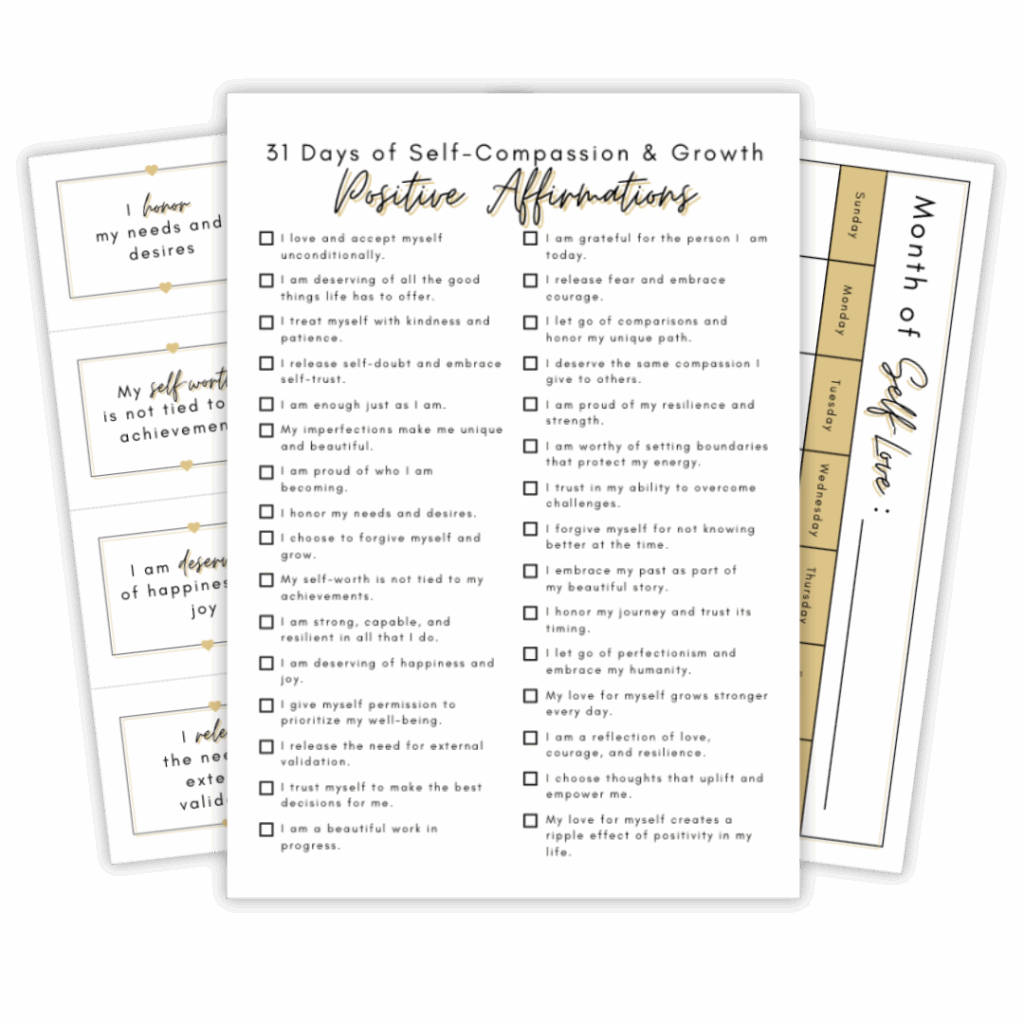
Want a FREE bundle with Positive Affirmations for Self-Love?
Just fill out the form below to receive your free affirmation bundle—featuring a 31-day challenge, printable affirmation cards, a full list of affirmations, and a calendar to help you stay gently committed each day.
#17 Gentle Movement or Yoga Nidra
Slow, mindful stretches or a guided yoga nidra practice encourage the nervous system to let go of tension. Unlike intense exercise, these movements signal safety to the body, making it easier to shift out of “fight or flight.”
#18 Laughter Therapy
Watch something funny, laugh with friends, or even practice “laughter yoga.” Genuine laughter increases oxygen intake, reduces stress hormones, and boosts endorphins, all of which support a nervous system reset.
#19 Self-Massage
Massaging areas like the jaw, temples, shoulders, or the soles of your feet activates pressure points that release tension. Even a short self-massage signals comfort to the nervous system and reduces stress hormones.
#20 Shaking and Loosening
Stand up, loosen your body, and shake out your arms, legs, and shoulders for a minute or two. This simple practice, inspired by somatic therapy, helps discharge built-up stress energy and restores a sense of calm.
#21 Weighted Blanket Rest
Lying under a weighted blanket provides gentle, even pressure that activates the body’s relaxation response. This can reduce anxiety, promote a sense of safety, and make it easier to transition into rest.
#22 Gentle Touch or Hug
Safe, nurturing touch — whether it’s a self-hug, hugging a loved one, or even petting an animal — increases oxytocin, the “bonding hormone,” and lowers stress responses in the body.
#23 Vagus Nerve Stimulation with Cold Breath
Take a deep inhale, then exhale slowly as if fogging up a mirror (“haaa” sound). This activates the vagus nerve through both the breath and throat vibration.
#24 Rocking or Swaying
Sit or stand and gently rock your body forward and back or side to side. Rhythmic rocking is naturally soothing and often used to calm infants. The same principle works for adults.
#25 Hand on Heart Practice
Place your hand over your heart, close your eyes, and breathe deeply. This simple gesture provides comfort, increases oxytocin, and signals safety to the body.
#26 Listening to Nature Sounds
Play recordings of ocean waves, rain, or birdsong. Studies show natural soundscapes lower blood pressure and heart rate while improving mood.
#27 Chewing Slowly
Eat a small snack (like a raisin) slowly and mindfully, paying attention to texture and flavor. Chewing activates the parasympathetic system and is especially calming for digestive balance.
#28 Lion’s Breath (Simhasana)
Inhale deeply through the nose, then exhale forcefully with the tongue out and eyes wide. This yogic breath helps release pent-up tension and stimulates the parasympathetic response
#29 Orienting to Safety
Look around the room slowly and name what you see. This tells your nervous system there’s no immediate danger, pulling you out of fight-or-flight and back into the present moment.
#30 Sighing Exercise
Take a deep inhale, then let out a long, audible sigh. Repeat a few times. Recent studies suggest sighing resets breathing patterns and down-regulates the stress response.
#31 Gentle Neck Stretches
Turn your head slowly side to side, tilt ear toward shoulder, and roll gently. Loosening the neck relaxes muscles connected to the vagus nerve and reduces stored tension.
#32 Mindful Touch with Objects
Hold a stone, bead, or fabric and focus on its texture, weight, and temperature. This tactile mindfulness anchors you to the present and reduces overstimulation.
#33 Breathing with Extended Exhale
Inhale naturally, then double the length of your exhale. For example, breathe in for 4 seconds, out for 8. This strongly activates the parasympathetic system and quickly calms stress.
Daily Habits for Nervous System Regulation
Start the Day with Calm
The way you begin your morning can set the tone for your entire nervous system. Taking just a few minutes for breathwork, meditation, or gentle stretching helps activate the parasympathetic system and creates a foundation of calm that carries into the day.
Use Mindful Breaks
Short pauses throughout the day give the nervous system a chance to reset. Even a two-minute breathing exercise, stepping outside, or listening to calming sounds can lower stress levels and prevent buildup of tension.
Stay Connected with the Body
Regular check-ins with your body help keep you grounded. Practices like mindful eating, noticing posture, or scanning for areas of tension and relaxing them can restore balance and keep the nervous system from staying in high alert.
Create an Evening Wind-Down Routine
How you close the day matters as much as how you start it. Dimming lights, unplugging from screens, and practicing quiet activities like reading, journaling, or listening to soothing sounds helps signal to the body that it’s time to rest.
Prioritize Consistency Over Intensity
Small daily rituals are more effective than occasional, intense practices. Consistency trains the nervous system to shift more easily into balance, building resilience and stability over time.
Precautions for Resetting the Nervous System Safely
Most techniques for resetting the nervous system are gentle and safe, but there are a few precautions to keep in mind.
People with certain health conditions — such as epilepsy, serious heart problems, or respiratory issues — should avoid or modify some practices, especially strong breathwork or cold exposure. If you are pregnant, it’s always best to consult a healthcare provider before starting new routines.
Volume and intensity also matter. With sound-based practices like binaural beats or sound baths, keep the volume at a comfortable level to protect your hearing. For cold therapy, start gradually rather than jumping straight into intense ice baths, and always listen to how your body responds. The same applies to movement practices — gentle, mindful stretching is supportive, while overexertion can create more stress rather than relieve it.
Finally, remember that resetting the nervous system is a supportive tool, not a replacement for medical or psychological treatment. If you’re experiencing ongoing anxiety, trauma, or health challenges, these practices can complement professional care but should not be used as the sole solution.
Listening to your body and adjusting as needed is the safest way to receive the benefits of nervous system regulation.
This post was all about resetting the nervous system.
Ready to bring more calm and balance into your life? Follow us on social media for daily tips and practices, or join our newsletter to receive exclusive guides, sound-based exercises, and inspiration straight to your inbox.


