
Zaphir Chimes for Healing (Beginner’s Guide): Tunings, Benefits, and Science
Looking for a simple way to create instant calm? Zaphir chimes offer clear, soothing tones that enhance meditation, yoga, and sound healing practices.
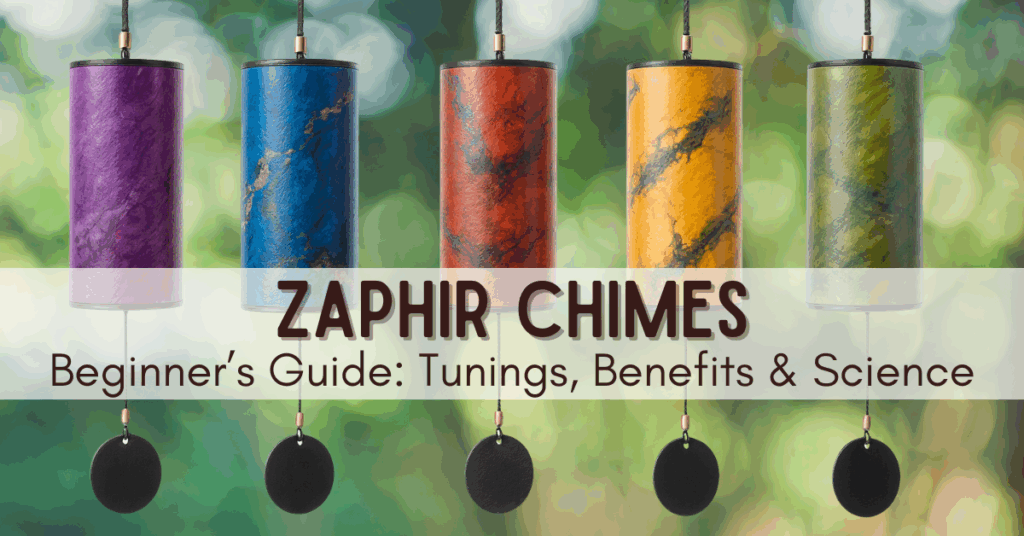
Zaphir chimes are a favorite among meditation, yoga, and sound healing practitioners. Their gentle, harmonious tones are well-known for creating calm and peaceful atmospheres.
These chimes are lightweight, portable, and versatile. They can be played by hand, hung in a room, or incorporated into larger sound healing sessions. Because of their clear and resonant tones, Zaphir chimes are often used to mark the beginning and end of meditation, signal transitions in yoga classes, or add a soft, melodic layer in sound baths. Many people also keep them in home or work spaces.
As a sound practitioner, I have worked with Zaphir chimes in individual sessions, group events, and workshops. I’ve seen how their tones can help people focus, release tension, and shift into a more relaxed state within moments.
In this article, we’ll explore what Zaphir chimes are and the science behind their soothing sound. You’ll learn about their benefits, the different tunings and how they sound, how they compare to Koshi chimes, and practical ways to use them in both personal and professional settings. We’ll also cover where to find authentic Zaphir chimes and tips for choosing the right one for your needs.
This post is all about Zaphir chimes.
This post may contain affiliate links. We may earn a small commission at no extra cost to you—thank you for supporting what we do. We only share offerings we truly believe in.
What Are Zaphir Chimes?
Zaphir chimes are handcrafted wind chimes from France known for their clear, soothing tones and colorful, artistic designs. Originally known as Shanti Chimes, they have been made for over three decades and are now enjoyed worldwide.
Each chime is tuned so its notes naturally complement one another. When they move, the sound is gentle, clear, and layered. They are available in five main tunings, each linked to a season and natural element: Crystalide for Spring, Sunray for Summer, Twilight for Autumn, Blue Moon for Winter, and Sufi as an all-season balance.
In the center of each Zaphir chime is a set of eight metal rods, precisely cut and tuned to specific notes. These rods are welded to a metal ring inside the chime’s cylindrical body, which acts as a resonator, amplifying and enriching the tones. When the chime is moved, the rods strike gently against one another, setting the whole chamber into vibration.
The sound of a Zaphir chime is soft, melodic, and full of gentle overtones that bring a sense of calm. They are simple to use and are becoming more popular in holistic wellness practices. Many people use them to mark the start or end of a meditation, create a peaceful atmosphere in yoga sessions, or incorporate them into sound healing sessions.
How Zaphir Chimes Work (The Science)
When you move a Zaphir chime, the tuned rods vibrate and create sound waves. These waves are organized into harmonious frequencies that your brain and body perceive as pleasant.
Because Zaphir chimes are tuned to a pentatonic scale, there are no jarring intervals. Every note blends smoothly with the others. This smoothness reduces the brain’s need to process “dissonance,” allowing it to shift out of alert mode.
The resonator body amplifies the tones and produces overtones which are subtle, higher-pitched frequencies layered above the main notes. These overtones create an enveloping sound that engages the auditory system more fully, drawing your attention into the present moment.
From a physiological perspective, listening to steady, harmonious tones can activate the parasympathetic nervous system — the “rest and digest” branch — lowering heart rate, easing muscle tension, and slowing the breath.
This process is supported by entrainment, where the brain’s electrical activity begins to synchronize with the rhythmic patterns or frequency ranges in the sound. This shift can encourage slower brainwave states, such as alpha or theta, which are linked with relaxation, meditation, and creativity.
Together, these effects make Zaphir chimes more than just pleasant to hear. Their resonance and tuning create an environment where the body naturally moves toward balance and calm.

Benefits of Zaphir Chimes
Encourages Deep Relaxation
The smooth, harmonious tones can help slow the breath, release muscle tension, and create a sense of physical ease. Many people notice their body naturally settling into a calmer state within moments of listening.
Supports Focus in Meditation
Their steady, clear tones provide a sound anchor, making it easier to stay present and reduce mental distractions.
Reduces Mental Chatter
By giving the mind a gentle, consistent sound to focus on, Zaphir chimes can quiet busy thoughts and promote mental clarity. This makes it easier to enter meditative states or simply enjoy a mental “pause” during the day.
Eases Emotional Stress
Their soothing resonance can help shift mood by reducing feelings of anxiety or restlessness. The soft, lingering tones often bring a feeling of comfort and emotional balance.
Supports Mind-Body Connection
The sustained vibrations invite awareness into the present moment, helping practitioners feel more grounded and connected during yoga, meditation, or healing work.
Enhances Yoga Sessions
Zaphir chimes can signal transitions, guide students into deep rest, or set a peaceful tone for the entire practice.
Complements Sound Healing
The soft, high tones blend well with other instruments, adding texture without overpowering the soundscape.
Creates a Peaceful Environment
Even outside of formal practice, they can add a sense of calm to a home, workspace, or wellness setting.
Types of Zaphir Chimes
Crystalide (Spring / Wood)
Crystalide has a bright, higher-pitched tone that feels light and clear. It’s often used to create an uplifting atmosphere or to add a sense of freshness at the start of a meditation or yoga session. Because of its clarity, it can help sharpen focus and attention.
Sunray (Summer / Fire)
Sunray produces warm, mid-range tones with a smooth and even quality. It works well for creating a comfortable, open environment in both group and individual settings. Practitioners often choose it for classes, circles, or workshops where a relaxed but alert energy is desired.
Twilight (Autumn / Metal)
Twilight has slightly deeper, more grounding tones compared to Crystalide and Sunray. The sound is steady and calming, making it a good choice for evening practices, restorative yoga, or guided relaxation sessions.
Blue Moon (Winter / Water)
Blue Moon offers calm, low-to-mid tones with a soft, even resonance. It’s well-suited for deep meditation, breathwork, or any practice where the aim is to slow down and create stillness.
Sufi (Intermediary Season / Earth)
Sufi combines both higher and lower notes for a balanced, adaptable tone. Its versatility makes it suitable for a wide range of practices, from energizing morning sessions to calming evening routines.
Zaphir Chimes vs Koshi Chimes
While both Zaphir and Koshi chimes are used for relaxation, meditation, and sound healing, there are key differences in their design and sound.
Design and Construction
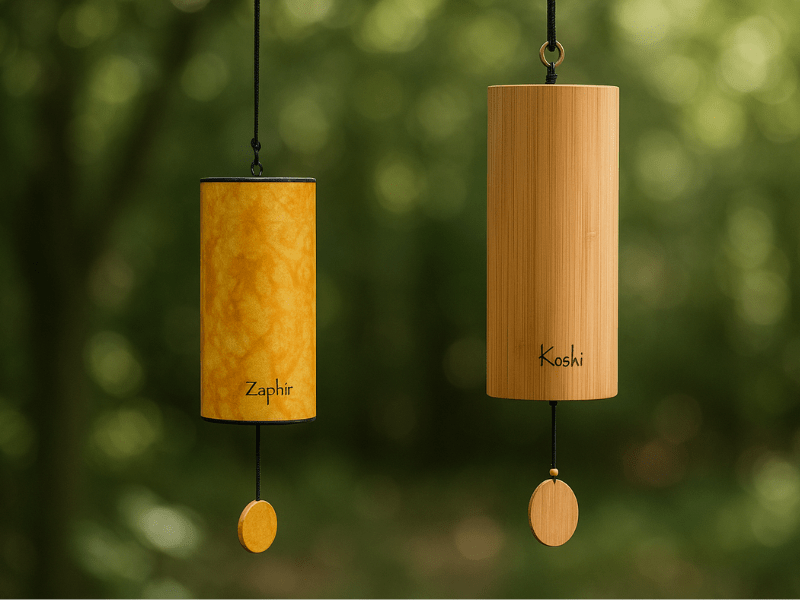
One of the most visible differences is size and appearance. Zaphir chimes are shorter and wider, with a cylindrical body made from laminated, long-fiber board and finished with hand-painted, colorful designs. The top and bottom caps are wood, giving them a distinct, decorative style. Koshi chimes are taller and slimmer, made with a bamboo veneer and a natural wood finish for a more minimal, earthy look.
Tuning and Sound
Zaphir chimes use a pentatonic tuning with five main seasonal scales: Crystalide, Sunray, Twilight, Blue Moon, and Sufi. Their tone is clear, resonant, and often described as slightly “brighter” due to the materials and tuning style. Koshi chimes also use a pentatonic scale but offer four tunings inspired by the elements: Terra, Aqua, Aria, and Ignis. Their sound tends to be a bit softer and mellower.
Use and Preference
Both are lightweight, easy to play, and suitable for similar settings — meditation, yoga, sound healing, classrooms, or home use. The choice often comes down to tonal preference, visual style, and the specific tuning that fits your intended atmosphere.
How to Use Zaphir Chimes
Playing the Chime
Hold the chime by the cord or wooden top so it can swing freely. For the clearest sound, move it gently in a circular motion or tilt it slightly to let the clapper strike the rods. Avoid shaking too hard. A light, steady movement produces the most even resonance. You can also hang the chime from a stand or hook where air movement can activate it naturally.
In Meditation
Play the chime at the beginning to signal the start of a session, or use it at intervals to help refocus attention. A single ring at the end can mark closure and bring the group or individual back to awareness.
In Yoga Practice
Use Zaphir chimes to transition between poses, introduce savasana, or deepen relaxation in restorative and yin yoga. Their clear tones can help guide breath awareness without verbal cues.
In Sound Healing
Blend the chime’s high, gentle tones with other instruments such as singing bowls, gongs, or drums. Its sound adds brightness and clarity to the overall soundscape. Move the chime slowly around the space or near a participant for a more immersive effect.
In Daily Life
Hang the chime in a workspace, reading corner, or bedroom for a calming background sound. A brief moment of playing it can help reset focus or create a sense of pause during a busy day.
Where to Buy Zaphir Chimes
Authentic Zaphir chimes are still handcrafted in France, but they’re available from retailers worldwide. The safest way to ensure you’re getting a genuine chime is to purchase from the official Zaphir website or from authorized sellers. Many reputable sound healing, yoga, and instrument shops also carry them, both in-store and online.
When buying, check the tuning, as each chime is set to a specific scale. If purchasing online, read product descriptions carefully and confirm that the seller lists the tuning name (Crystalide, Sunray, Twilight, Blue Moon, or Sufi).
The Twilight tuning is a great choice for a first Zaphir chime. Its warm, balanced tones work beautifully in both meditative and everyday settings. It’s versatile, easy on the ears, and blends effortlessly with other instruments, making it an inviting option for beginners.
Be cautious of unusually low prices or generic “pentatonic wind chimes” that don’t list the Zaphir brand, as these may be imitations with lower build quality and less accurate tuning.
This post was all about Zaphir chimes.
If you found this guide helpful, follow us on social media or join our newsletter for more tips, instrument guides, and sound inspiration.


