
5 Popular Drums for Healing (A Beginner’s Guide)
Can something as simple as rhythm really change how you feel? Explore 5 powerful types of drums for healing and learn how their rhythms create space for relaxation, clarity, and transformation!
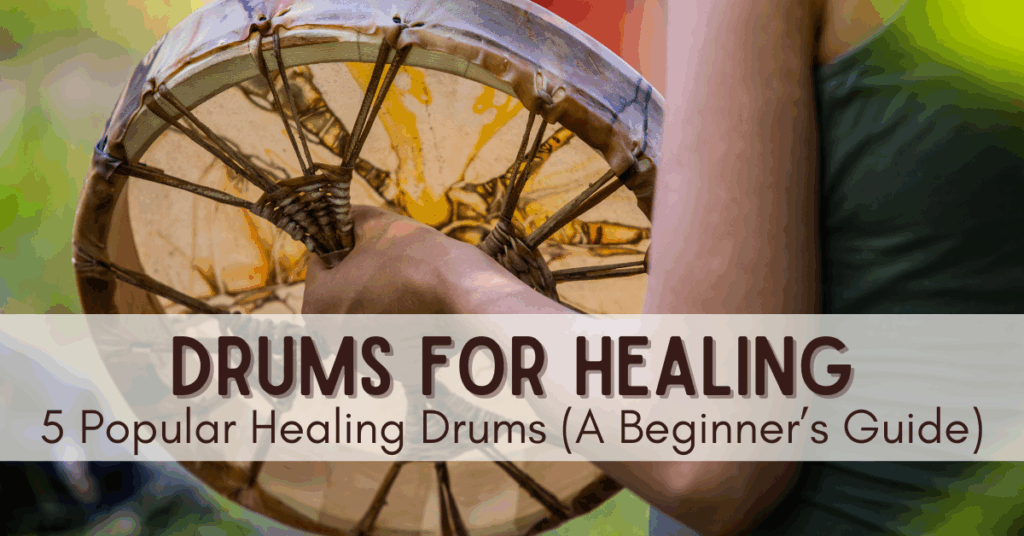
Drums for healing offer a simple yet powerful way to bring rhythm into wellness practices. From grounding beats to flowing melodic tones, these instruments create soundscapes that calm the mind, relax the body, and support deeper connection.
What sets them apart is their accessibility. You don’t need years of training to pick one up and begin exploring the benefits of rhythm and vibration.
The variety of drums for healing available today means there is something for everyone. Some invite steady, meditative beats, while others fill the air with soft, melodic resonance. Each has its own character, and together they show how versatile rhythm can be as a tool for balance and renewal.
In this post, we’ll highlight several popular healing drums, explore what makes them unique, and share how you can begin weaving them into your own sound practices. Whether you’re new to drumming or already drawn to the language of rhythm, there is an instrument that can support your journey.
This post is all about drums for healing.
This post may contain affiliate links. We may earn a small commission at no extra cost to you—thank you for supporting what we do. We only share offerings we truly believe in.
The Power of Drums for Healing Practices
For thousands of years, drums have been used not just for music but for connection, ceremony, and healing.
Many traditions saw the drumbeat as the heartbeat of the Earth, a sound that could ground the body and open the spirit. Whether it was Native American frame drums, African djembes, or shamanic hand drums, rhythm has always been a way for people to release emotion, find balance, and come together in community.
What ancient cultures knew intuitively is now being supported by science. Studies on therapeutic drumming show that steady rhythms can guide brain activity into calmer, more relaxed states through a process called entrainment. The vibrations of the drum interact with the nervous system, helping to reduce stress, ease tension, and even strengthen the body’s natural rhythms.
Group drumming has also been shown to lift mood and support well-being, highlighting the deep connection between rhythm, health, and human connection.
When we explore drums for healing today, we’re tapping into both history and science. The simple act of creating rhythm carries the power to restore balance. It reminds us that healing doesn’t always come through words, but through sound and vibration.
Popular Types of Drums for Healing
#1 Shamanic Drum
The shamanic drum is a type of frame drum, one of the oldest and simplest forms of percussion found across cultures. It is usually made with a wooden frame and an animal skin stretched tightly over the top, sometimes decorated with symbols or natural materials that carry spiritual meaning. Played with a mallet or the hand, its sound is deep, steady, and earthy.
For thousands of years, shamans have used this drum as a guide for journeying and rituals. The repetitive beat, often slow and steady, was believed to help open pathways between the physical and spiritual worlds. In many traditions, the drum was seen not just as an instrument, but as a companion. It carried prayers and connected the drummer with unseen realms.
The shamanic drum belongs to the wider family of frame drums, instruments found in nearly every culture. Native American drums, for example, are often used in ceremonies and healing rituals, while the Irish bodhrán and Middle Eastern daf hold their own rich traditions.
Today, the shamanic drum has become one of the most popular instruments used for healing. Its grounding resonance is widely found in sound baths, meditation circles, and ceremonial gatherings.
Because it is usually played with a simple, steady rhythm, it is very accessible for beginners. At the same time, experienced players may spend years developing a deeper relationship with the drum, using it to carry intention and guide others through more elaborate practices.
#2 Tongue Drum
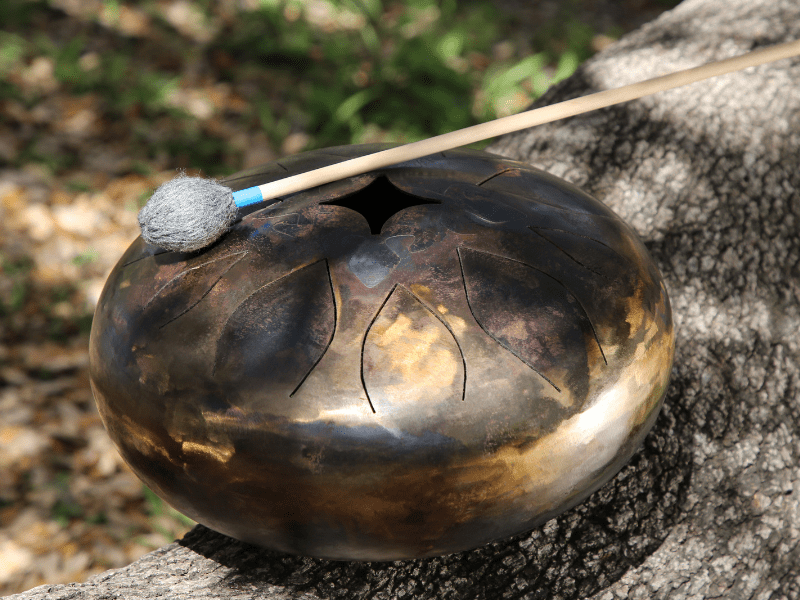
The tongue drum is a modern percussion instrument known for its gentle, soothing sound. Typically made of steel, it features carved or cut “tongues” on the surface that are struck with mallets or fingers. Each tongue produces a different note, creating a set of tones that blend into a calming, melodic resonance. Its appearance is often circular, with the tongues arranged in a pattern that is both functional and visually striking.
Unlike many traditional drums, the tongue drum is not about driving rhythm but about creating flowing melodies. Its tones are soft, bell-like, and harmonious, making it an instrument that immediately invites relaxation. Because it is usually tuned to specific scales, it is difficult to play a “wrong” note. This gives it an intuitive, accessible quality that allows even beginners to create beautiful music right away.
In the context of healing, the tongue drum is often used for meditation, stress reduction, and creating peaceful soundscapes. Its sound can fill a room without being overpowering, offering a gentle atmosphere that supports reflection and inner calm. While more complex instruments like the handpan may require greater technique, the tongue drum offers a simple yet powerful way to bring melody and mindfulness into any healing practice.
#3 Ocean Drum
The ocean drum is a unique type of frame drum designed to capture the soothing rhythm of waves. It is usually round, with two clear or skin heads stretched over a frame and filled with hundreds of tiny beads.
When the drum is gently tilted, the beads roll across the surface, producing the unmistakable sound of the sea moving back and forth. Depending on the angle and speed of movement, the sound can shift from a calm shoreline ripple to the steady crash of a tide.
Unlike drums that are played primarily for rhythm, the ocean drum is about creating atmosphere. Its sound is immersive and deeply calming, making it a favorite in sound baths, meditation, and relaxation practices.
The instrument doesn’t require any training. Simply holding and tilting it is enough to create flowing soundscapes. This makes it one of the most accessible drums for beginners, while still being versatile enough for experienced practitioners to weave into more layered sound journeys.
What makes the ocean drum especially powerful for healing is its natural connection to water. The gentle wash of its sound can calm the nervous system, ease tension, and invite a meditative state. For many, it carries the same sense of peace as sitting by the sea, reminding us of the timeless rhythm of nature and our own inner tides.
Sometimes this instrument is also called a “wave drum.” Both have beads inside a frame that roll to create flowing sounds, but the ocean drum is specifically designed to mimic the sea, while the wave drum is a broader variation that can be used more percussively as well.
#4 Djembe
The djembe is one of the most widely recognized drums in the world, known for its powerful sound and deep cultural roots. Originating in West Africa, it is carved from a single piece of hardwood and topped with a stretched animal skin. Its goblet-shaped body gives it a wide range of tones, from sharp, high slaps to deep, resonant bass notes. Played with the hands, the djembe has a voice that can be both commanding and joyful, filling a room with energy.
Traditionally, the djembe was used in ceremonies, storytelling, and communal gatherings. Its rhythms were meant to bring people together, carrying messages and marking important events.
Even today, the djembe is often at the heart of drum circles and community celebrations, where its lively pulse encourages movement, connection, and release. For many, its sound is both grounding and uplifting..
In healing practices, the djembe is valued for its ability to release tension and invite expression. Striking the drum can be physically cathartic, while the vibrations help shift stagnant energy.
Because it is highly responsive and versatile, the djembe can take some practice to master, but beginners can still enjoy its basic tones right away. Whether played solo or in a group, the djembe offers a powerful way to reconnect with rhythm, community, and the joy of sound.
#5 Handpan (AKA Hangdrum)
The handpan is a relatively new instrument, first developed in the early 2000s, yet it has quickly become one of the most beloved in sound healing and meditation. While often grouped with drums, it is better described as a melodic percussion instrument.
Made of steel shaped into two domes, the handpan has carefully hammered “tone fields” around a central note. Each area produces a distinct pitch, allowing the player to create flowing melodies as well as gentle rhythms.
Its sound is unlike that of a traditional drum. The tones are soft, resonant, and bell-like, blending melody with percussion. Many describe it as ethereal. This unique quality is part of why the handpan is so often used in meditation sessions, yoga classes, and sound baths, where its soundscape can quiet the mind and invite deep relaxation.
For beginners, the handpan is surprisingly approachable. Because it is usually tuned to a single scale, almost any combination of notes will sound harmonious. Experienced players, however, can explore more complex rhythms and improvisations.
The main limitation is cost: handpans are handcrafted and can be quite expensive, often less accessible than other healing drums.
The tongue drum is often seen as its close cousin. Both are steel instruments that combine melody and percussion, but the tongue drum is simpler, more affordable, and a popular starting point for those drawn to the sound of the handpan.
How to Choose the Right Drums for Healing
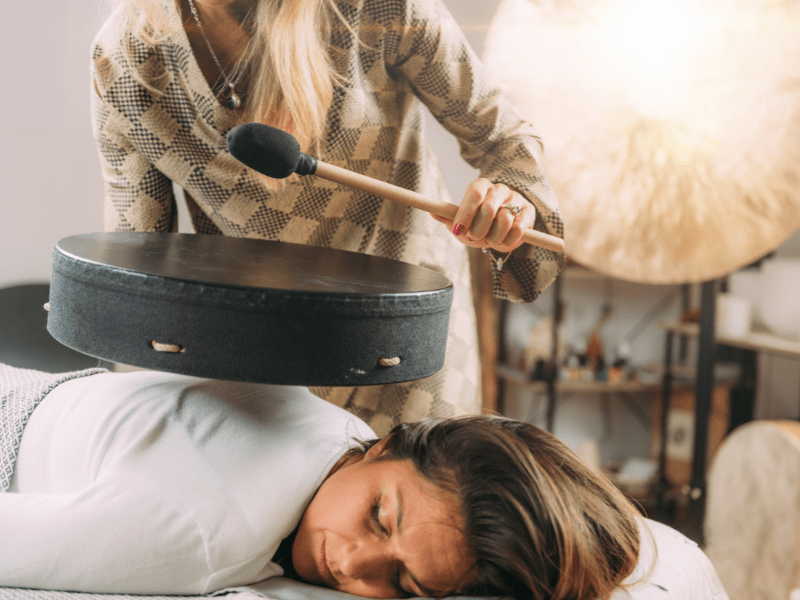
With so many types of drums available, choosing the right one for healing comes down to intention, comfort, and personal connection. Each instrument has its own voice, and the best choice is often the one that feels most aligned with your needs.
| Drum | Sound Quality | Best For | Beginner Friendly? | Cost Range |
| Shamanic Drum | Deep, steady, earthy pulse | Journeying, grounding, ceremonies | Yes (Basic beats) | Moderate |
| Tongue Drum | Soft, melodic, bell-like | Meditation, stress relief, gentle practice | Very | Affordable |
| Ocean Drum | Flowing, wave-like, atmospheric | Relaxation, meditation, soundscapes | Very | Affordable |
| Djembe | Wide range: bass to sharp slaps | Community, expression, releasing tension | Somewhat (Basic tones) | Moderate |
| Hangdrum | Ethereal, resonant, harmonic | Meditation, yoga, sound baths | Somewhat (Easy to start) | Expensive |
If you’re drawn to strong, grounding rhythms, a shamanic drum or djembe may be ideal. Both carry powerful beats that encourage movement, release, and connection. For softer, melodic tones that support relaxation, the tongue drum or handpan offer flowing, harmonious sounds. If you’re looking for atmosphere rather than rhythm, the ocean drum creates the calming wash of waves, making it perfect for meditation and deep rest.
Practical factors matter too. Some instruments, like the tongue drum and ocean drum, are very beginner-friendly, while others, such as the djembe and handpan, may take practice to play with confidence. Cost is another consideration: handpans can be quite expensive, while frame drums and tongue drums are usually more accessible.
The most important factor, however, is resonance — not just in sound, but in how the drum makes you feel. If possible, try listening to or playing different drums before choosing. Notice which one draws you in, grounds you, or opens you up. Healing with drums is less about perfect technique and more about the connection you build with the instrument itself.
Incorporating Drums into Your Practice
There are many ways to bring drums into healing work. Each approach can create a different atmosphere and support a different intention. Here are a few ideas:
Personal Meditation: Use a drum to set a steady rhythm while you sit in meditation. The sound helps quiet the mind and provides an anchor for focus.
Sound Baths: Drums add grounding and depth to a sound bath. Instruments like the ocean drum or shamanic drum can be played alongside bowls, chimes, or voice to create a fuller soundscape.
Movement and Dance: The lively beat of a djembe or frame drum naturally encourages the body to move. Drumming with movement can help release tension and boost energy.
Breathwork Support: A slow, steady drumbeat can be paired with breathing practices. The rhythm offers a natural guide for inhaling and exhaling, deepening relaxation.
Group Circles: Playing together in a drum circle builds connection and shared energy. Even simple rhythms can create a powerful sense of unity.
Creative Exploration: Free play with melodic drums like the handpan or tongue drum can become a form of musical journaling. The sounds often reflect your mood and open space for self-expression.
Guided Journeys: Shamanic drumming in particular can support visualization or inner journey practices, where the beat carries attention inward.
This post was all about drums for healing.
Thank you for exploring the world of drums for healing with us! If you’d like more articles, sound practices, and insights delivered straight to your inbox, be sure to join our newsletter and stay connected.


